Chapelle du Quartier Haut, Sète
15.11.2019
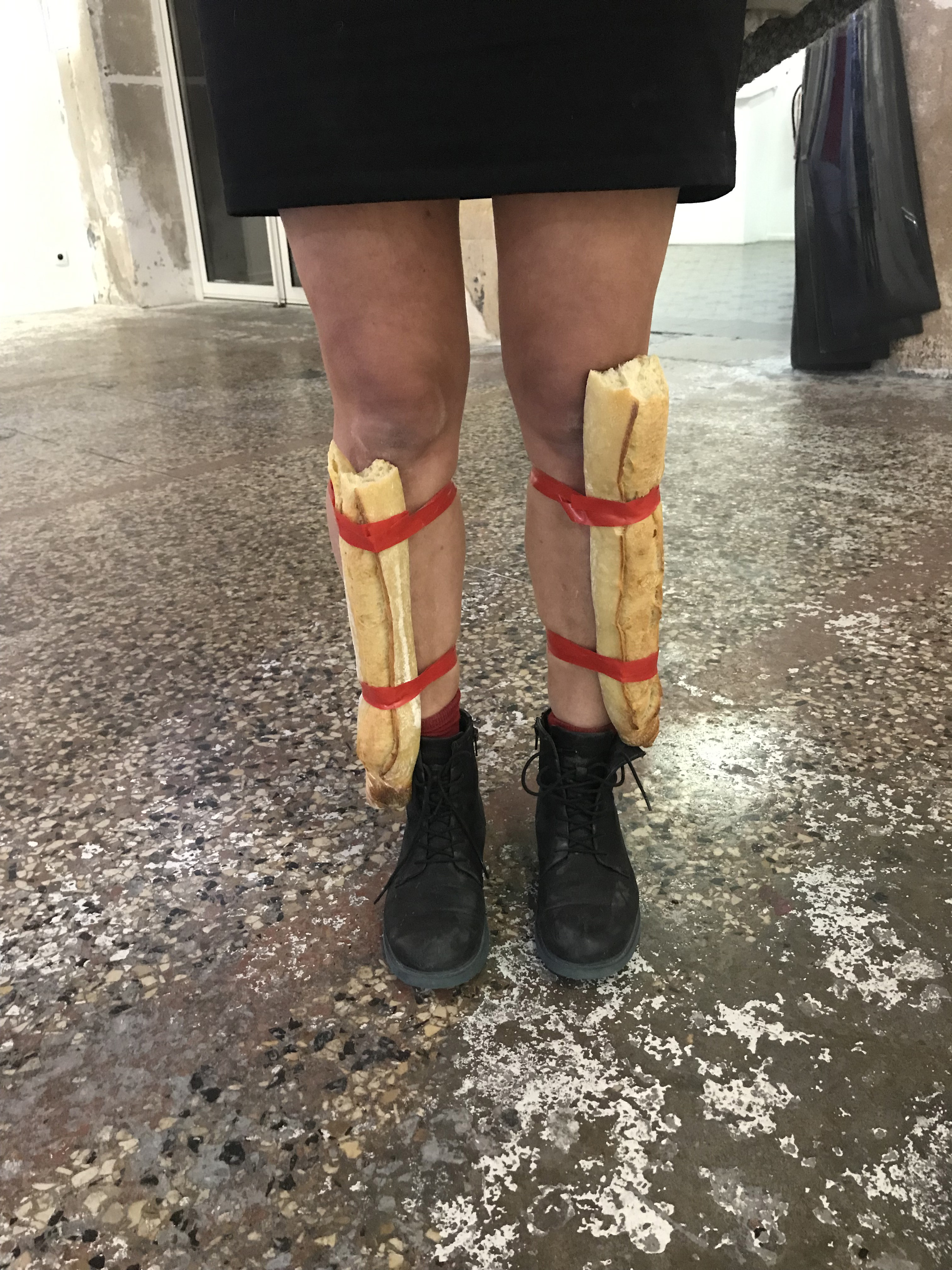
Title: My tibias are like baguettes
Duration: 20’ min.
Exhibition: À dessin 5
Venue: Chapelle du Quartier Haut, Sète, France
Date: 15.11.2019
Research artist in the fields of memory, identity and migration
Title: My tibias are like baguettes
Duration: 20’ min.
Exhibition: À dessin 5
Venue: Chapelle du Quartier Haut, Sète, France
Date: 15.11.2019
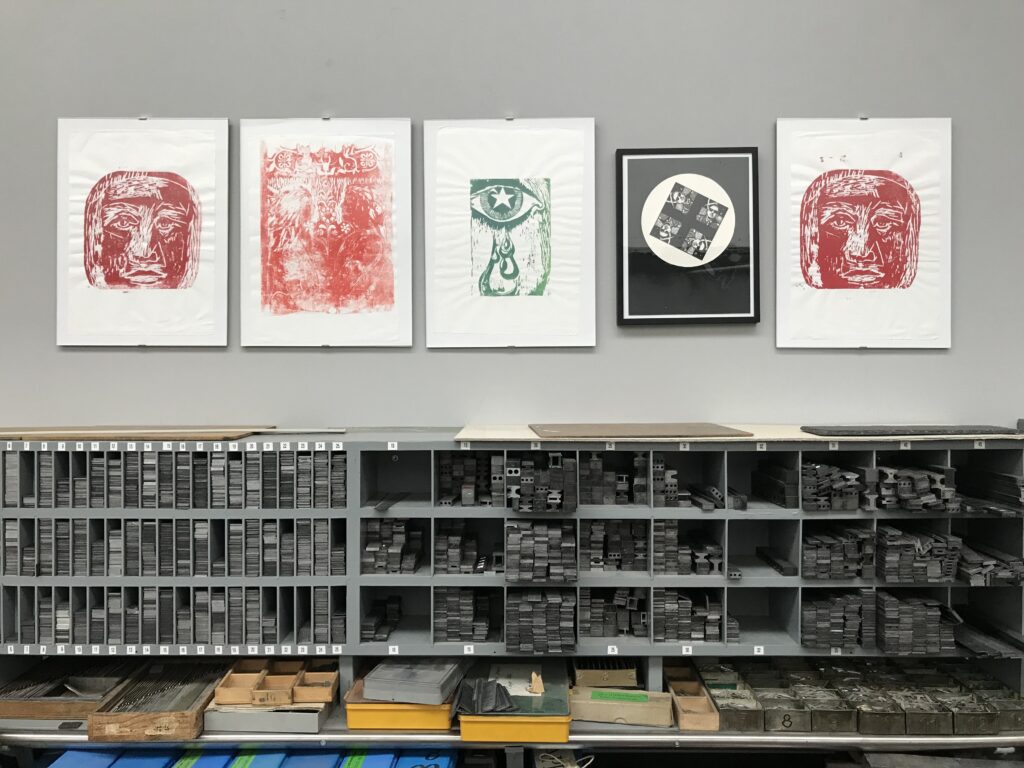
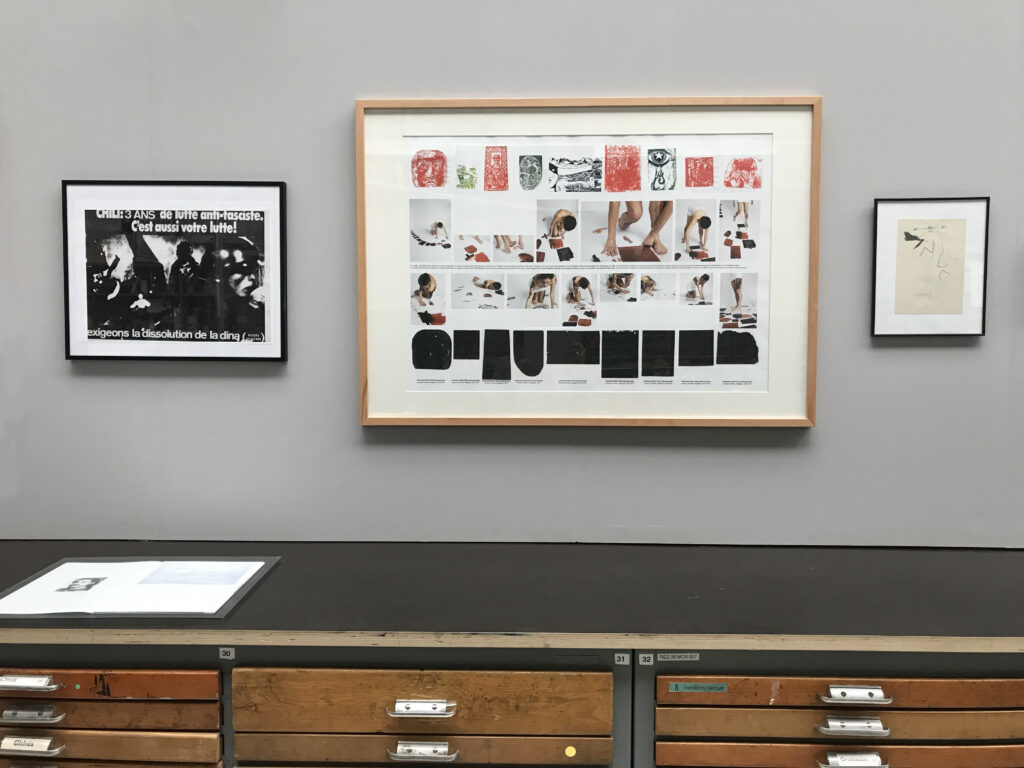
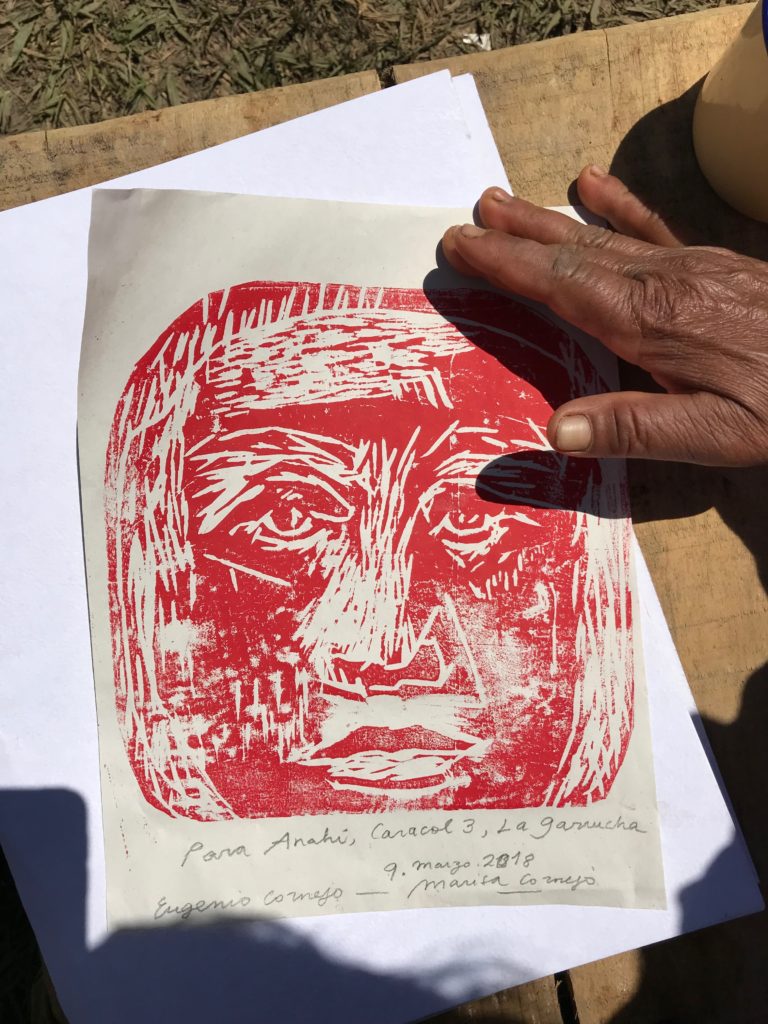
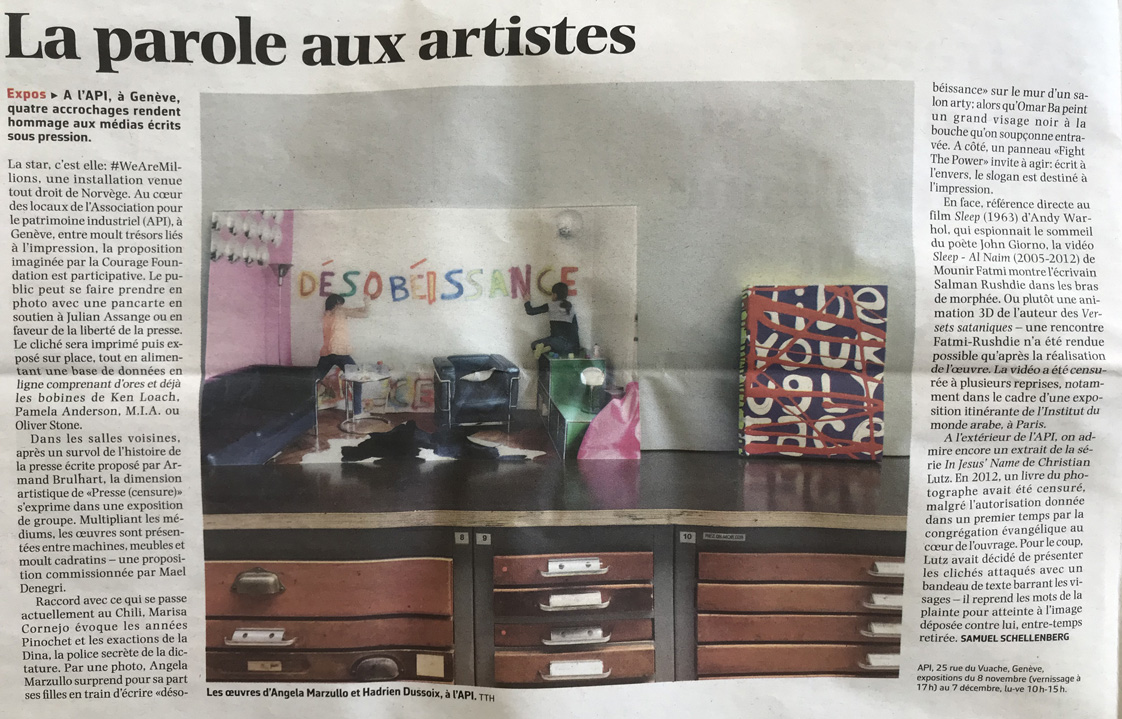
Works: Linoleum engravings of Eugenio Cornejo, printed by Marisa Cornejo, collage and engravings 1977 – 2020.
Exhibition: Presse (Censure)
Artists: Omar Ba, Harold Bouvard, Rudolf Gerhard Bunk, Eugenio Cornejo, Marisa Cornejo, Igor Denegri, Mael Denegri, Hadrien Dussoix, Mounir Fatmi, Christian Lutz, Angela Marzullo, Maurice M’Boa, Barbara Polla, Zenawi Rezene and WeAreMillions
Curated by: Mael Denegri
Venue: Association pour le patrimoine industriel, 25, rue du Vuache, 1205 Genève, Switzerland
Dates: 08.11.–07.12.2019
Artist: Marisa Cornejo
Places and dates:
Galeria Espacio Flor, Santiago — 01.2013
Plodviv Station, Bulgaria — 08.2013
Escotilla 8, Estadio Nacional, Santiago — 11.2013
El Caracol, Estadio Nacional, Santiago — 26.12.2015
Usine Kugler, Genève — 13.11.2017
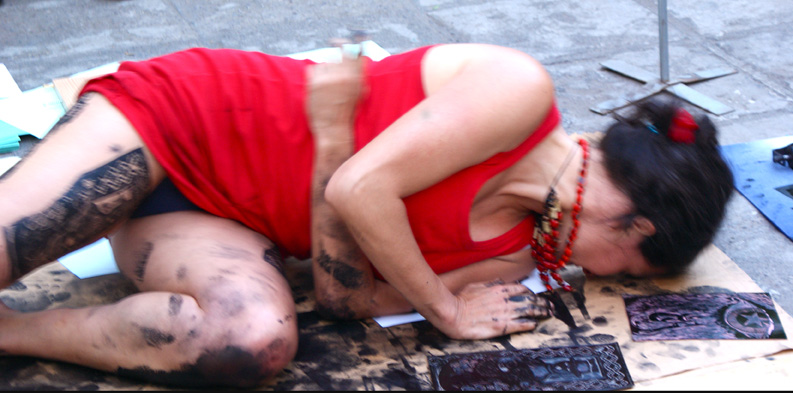
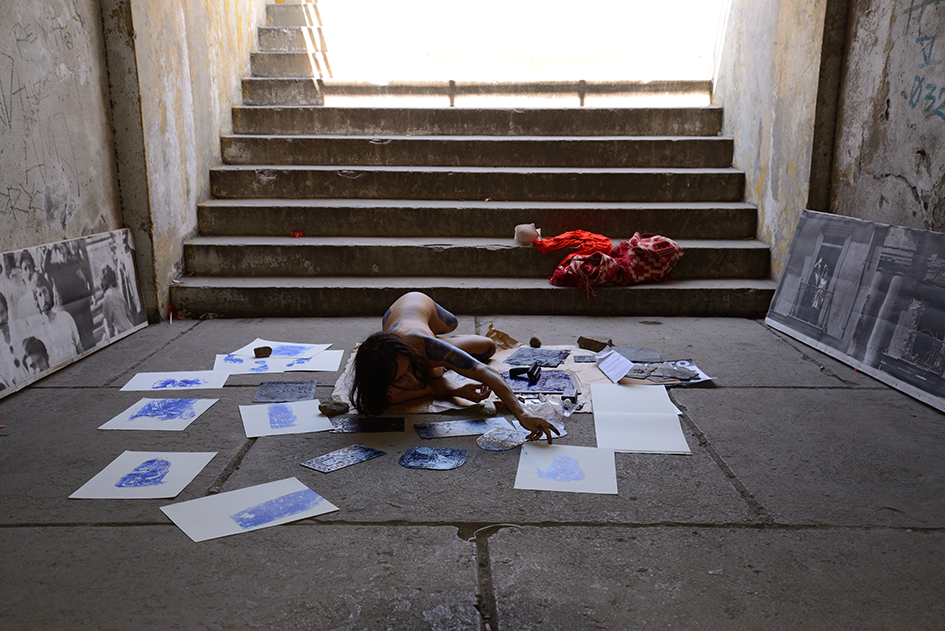
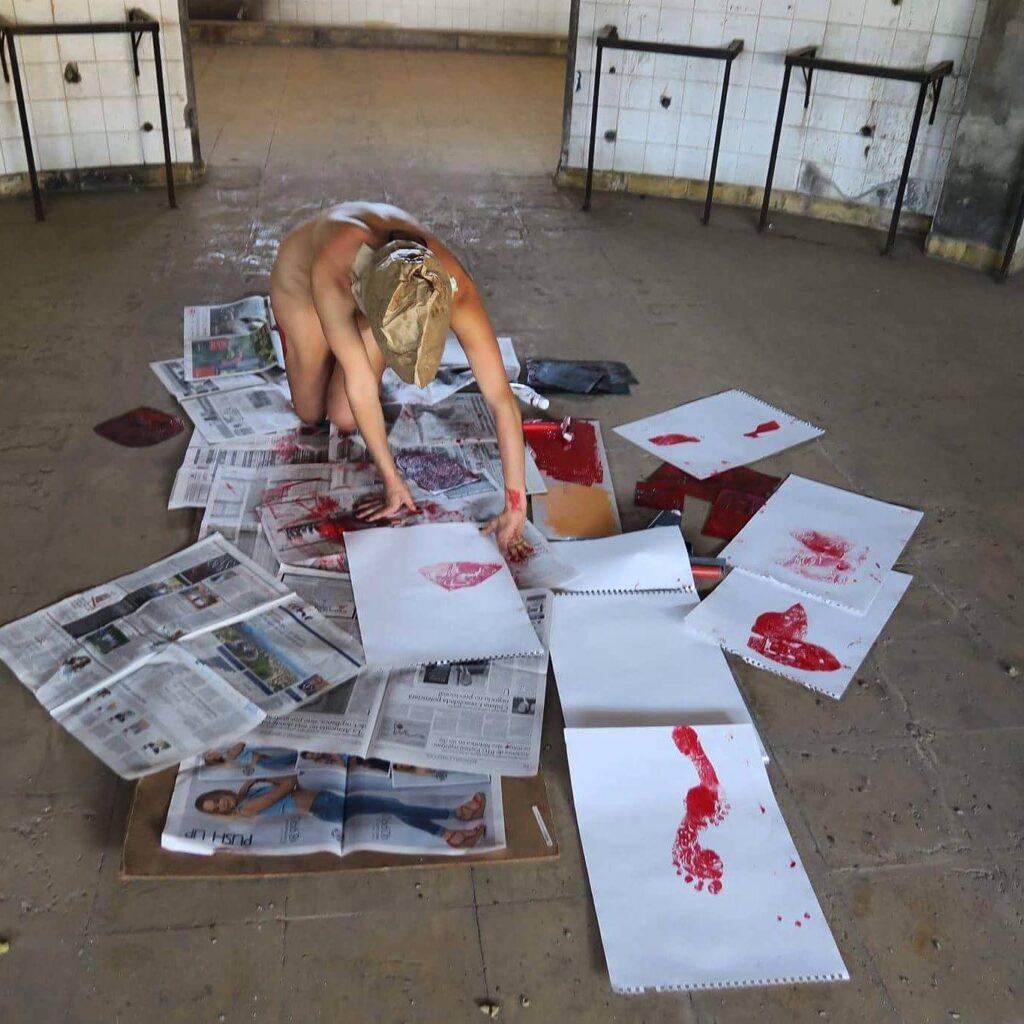
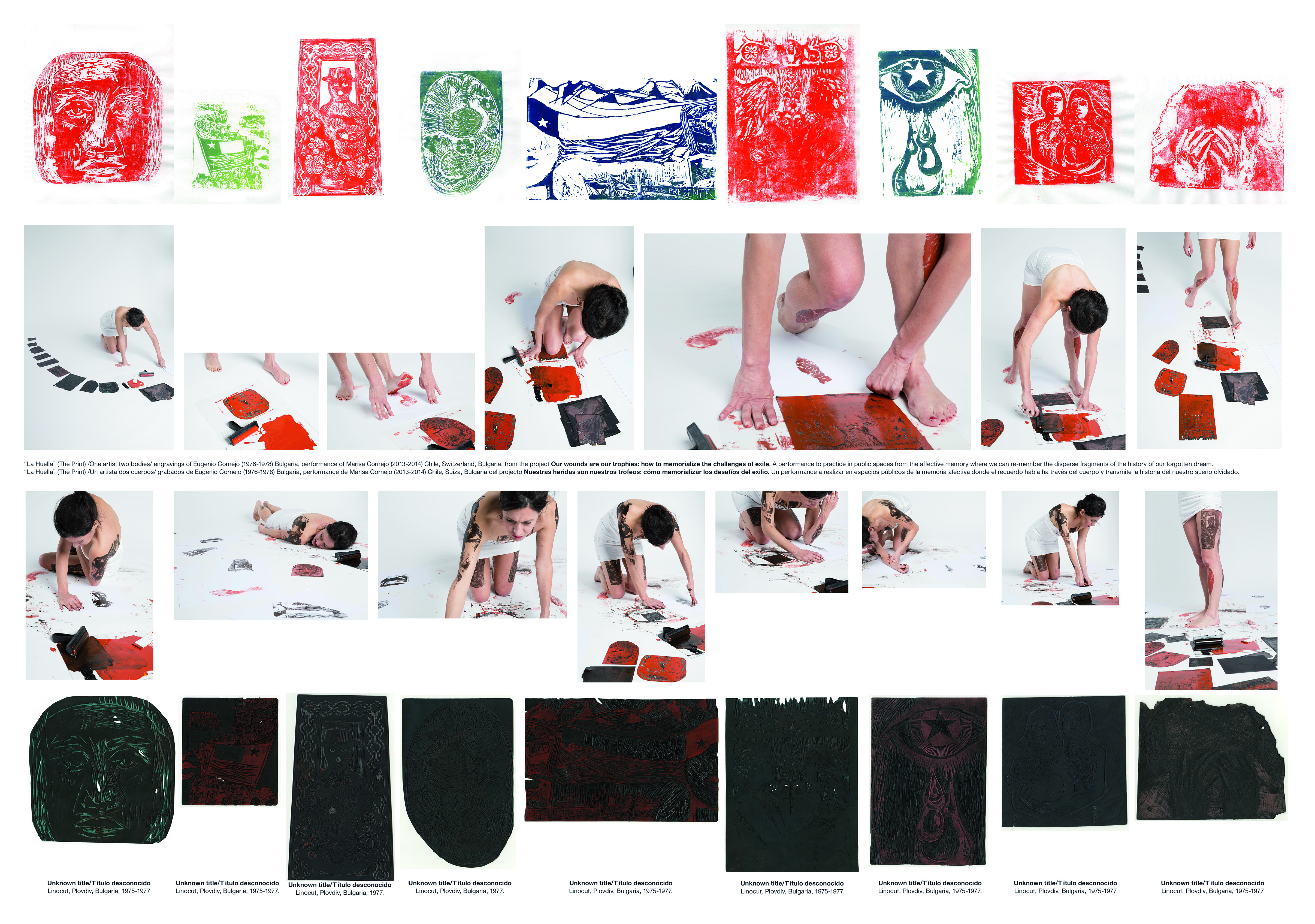
Between 2013 and 2015, Cornejo did 6 performances going back to some places related to the wounds of her exile. Two of them are places of memory, Escotilla 8 and El Caracol from the Estadio Nacional, the football stadium that after the coup d’etat in Chile was used as the largest concentration camp. There, thousands of people were imprisoned and tortured, among them the father of the artist, an art teacher, Eugenio Cornejo. Also in the train station of Plovdiv, Bulgaria, where she lived with her family in exile between 1977 and 1978, and Geneva. She realized the performance La Huella by reprinting with her body the engraving plates done by her father in bulgaria. With this performances she activated the memory of the exiled people that will never return, as her father who died in Mexico in 2002 unable to find a place in an extremely neoliberalized chilean society. She used this performance as a tool to reweave the history of the chilean diaspora, and an attempt to repair the transgenerational trauma of imprisonment, torture and exile still present in our communities.
« C’est un rêve qui a soufflé à Marisa Cornejo la suite de son parcours artistique. «Quelques jeunes artistes m’aident à imprimer avec mon corps les plaques de gravure que mon père a
faites durant son exil», dit l’avant-dernier songe publié dans I am (art&fiction, 2013). Quand elle était enfant, en Bulgarie, il lui avait fait poser ses pieds sur l’encre d’une plaque gravée, avant d’imprimer leurs empreintes sur une feuille qu’elle a conservée.
Elle se lance alors dans une réflexion sur ce geste porteur de mémoire et de transmission. Un work in progress La Huella qui prend la forme de performances publiques exécutées dans les lieux du passé, en Bulgarie et au Chili, revisités du coup en actrice et non en victime passive. La démarche est libératrice.
Son travail sur la brutalité de la dictature passe par le corps, qui devient «une métaphore, une archive à activer par le biais des rêves». Le cadre (de ce projet de performances) ouvre également un dialogue avec des auteurs et des textes, des activistes et des historiens, grâce auxquels elle a le courage d’aller dans la chambre où son père a été torturé, au Stade national de Santiago de Chili. «J’ai pu confronter ce grand monstre dans ma tête, ce lieu interdit.» Elle y donne une performance lors de laquelle elle finit nue, en écho au récit sur la torture qu’elle vient d’entendre de la bouche d’un rescapé. «Je ne veux pas qu’on oublie, ce n’est pas fini», dit Marisa Cornejo. L’art peut aider à ce travail de guérison collective. Et si «tous les Chiliens n’y sont pas prêts», elle ne porte plus seule le poids de l’histoire. Les rêves se partagent. »
(Anne Pitteloud, La vie rêvée, Le Courrier, 18 janvier 2014.)
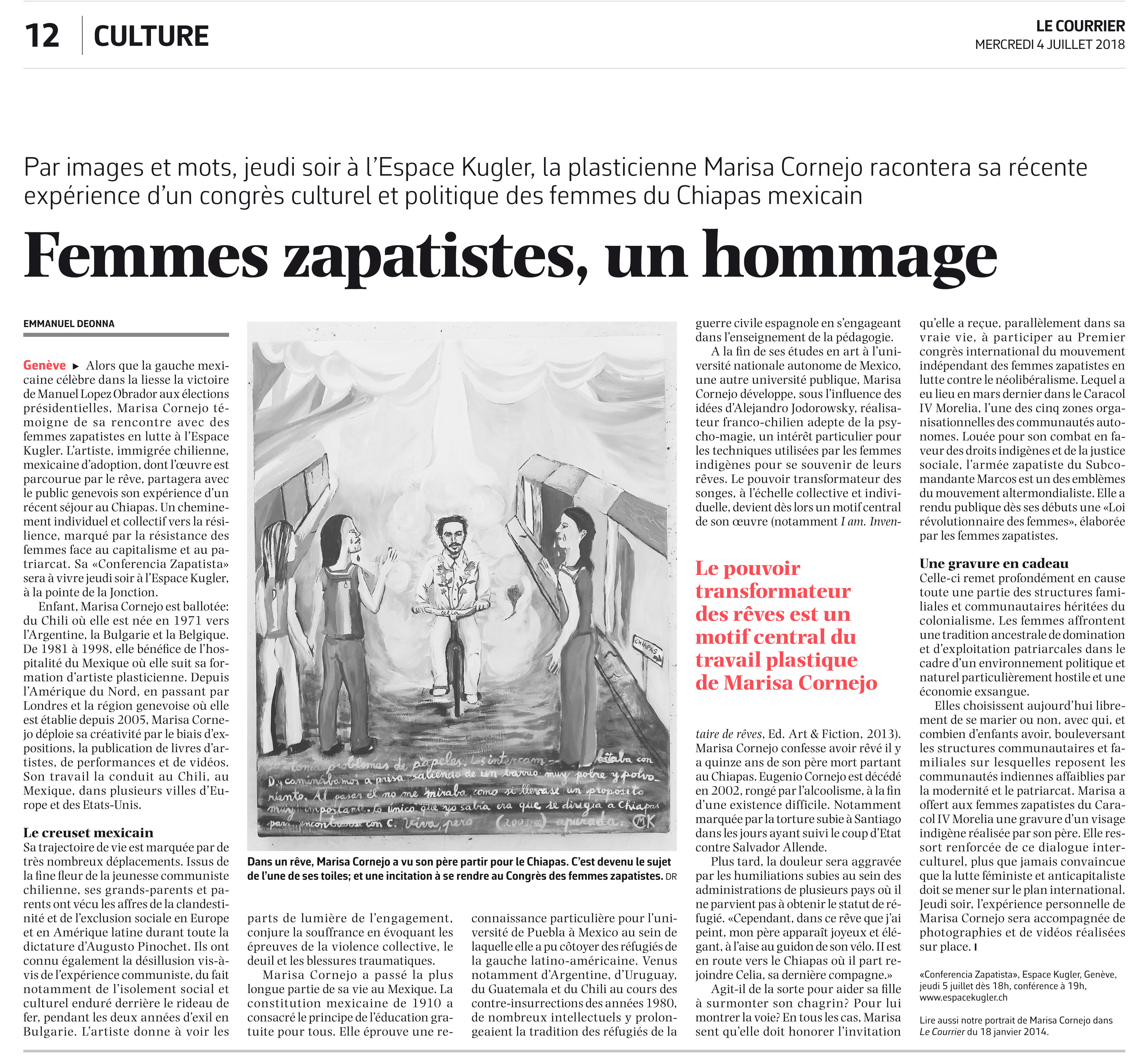
Title: Conferencia Zapatista, second edition
By: Marisa Cornejo
Curated by: Stéphanie Prizreni
Assisted by: Victoria Prouteau et Rafael Correa
Special participation: Emmanuel Deonna
Venue: Espace Kugler, Genève
Date: 05.07.2018, 7 pm
Du 8 au 10 mars 2018 a eu lieu le 1er Congrès politique, artistique, sportif et culturel International de Femmes qui luttent dans le territoire zapatiste, spécifiquement dans le Caracol IV Morelia, il s’agit du 1er congrès international du mouvement indépendant des femmes zapatistes en lutte contre le néolibéralisme.
L’artiste Marisa Cornejo qui a participé à cet événement présentera lors de cette conférence à l’Espace Kugler, le programme du congrès, son déroulement, les expériences de vie collective avec les autres participantes, les ateliers de réflexions, les rencontres importantes, ainsi que le discours prononcé par les femmes zapatistes à toutes les femmes du monde le 8 mars à l’ouverture du congrès, intitulé UNE FORÊT DE FEMMES. Marisa témoignera de son expérience personnelle au travers de photographies et de vidéos, une archive qu’elle a réalisée sur place.
THE AGREEMENT — Marisa Cornejo
Lors de sa participation, Marisa a aussi fait une petite action artistique pour nourrir la mémoire de résistance au néo-colonialisme du continent Latino Américain et elle montrera le matériel de cette performance en conclusion de conférence.
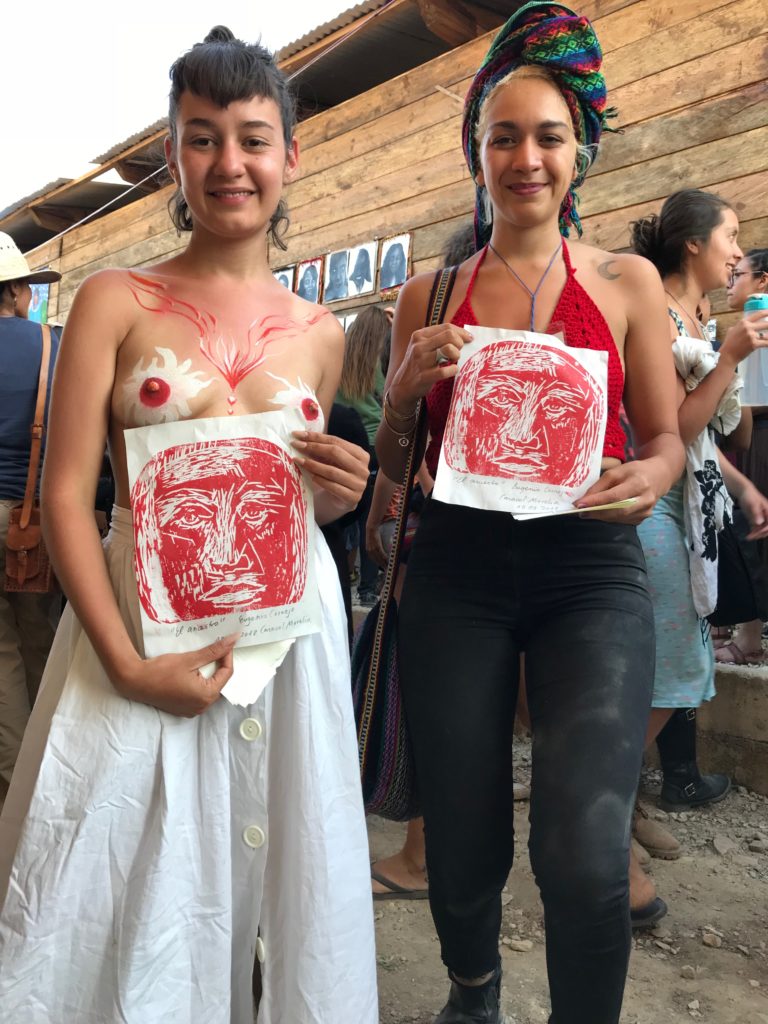
Artists: Eugenio Cornejo and Marisa Cornejo
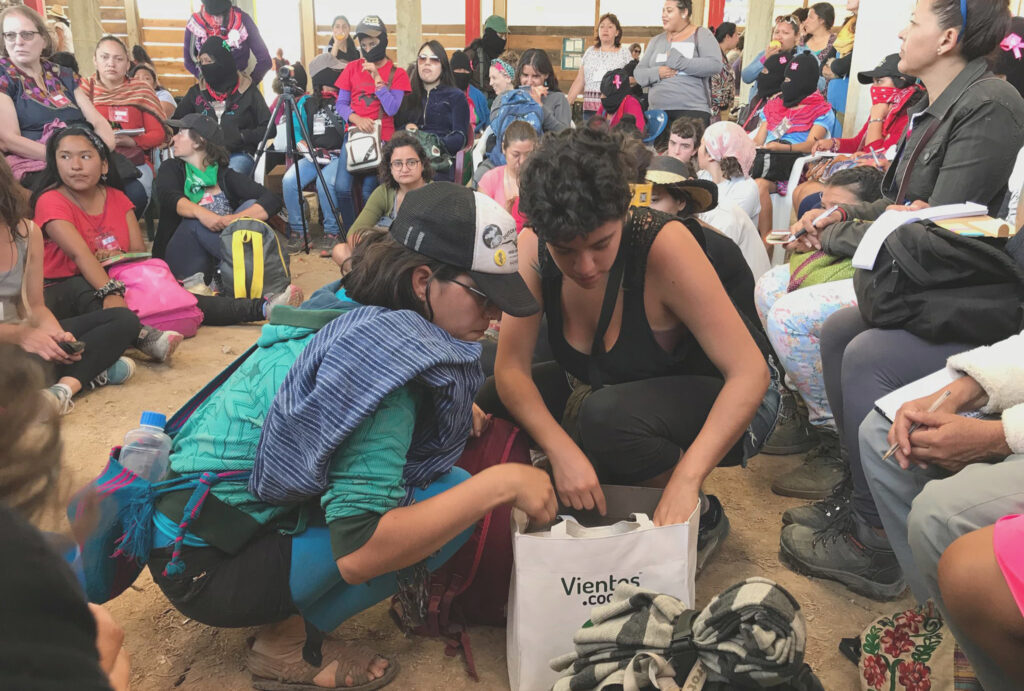
Venue: Political, artistic, sporting, and cultural International Congress of Women who Fight, Caracol Morelia, Chiapas, Mexico
Date: 9 March 2018
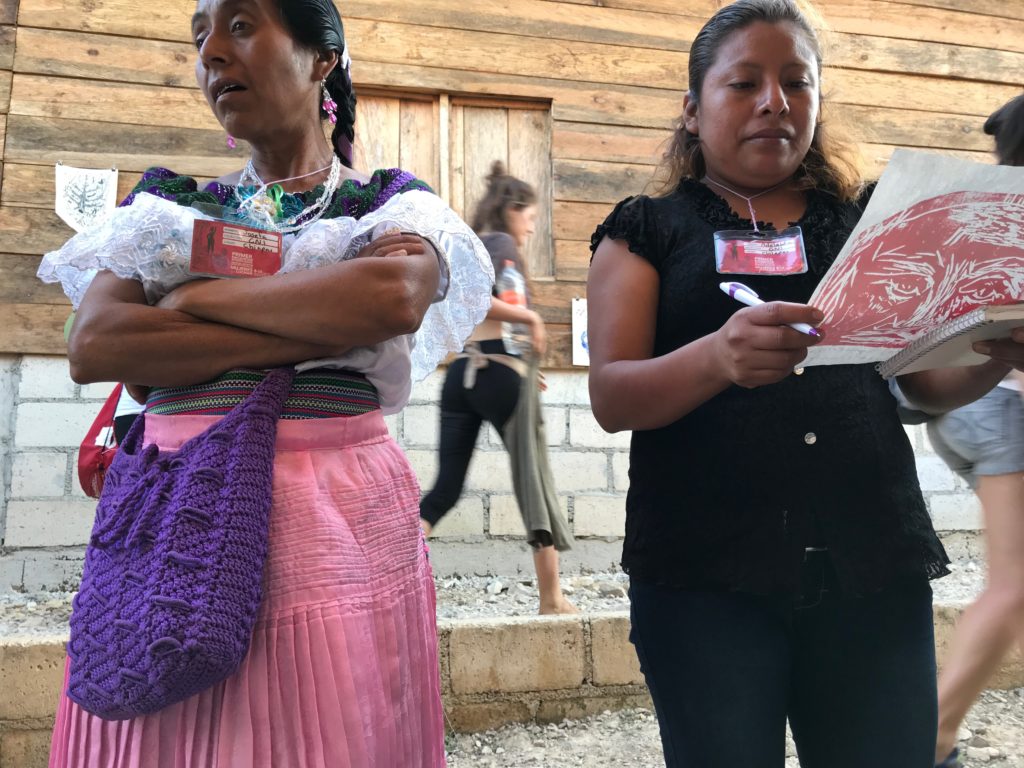
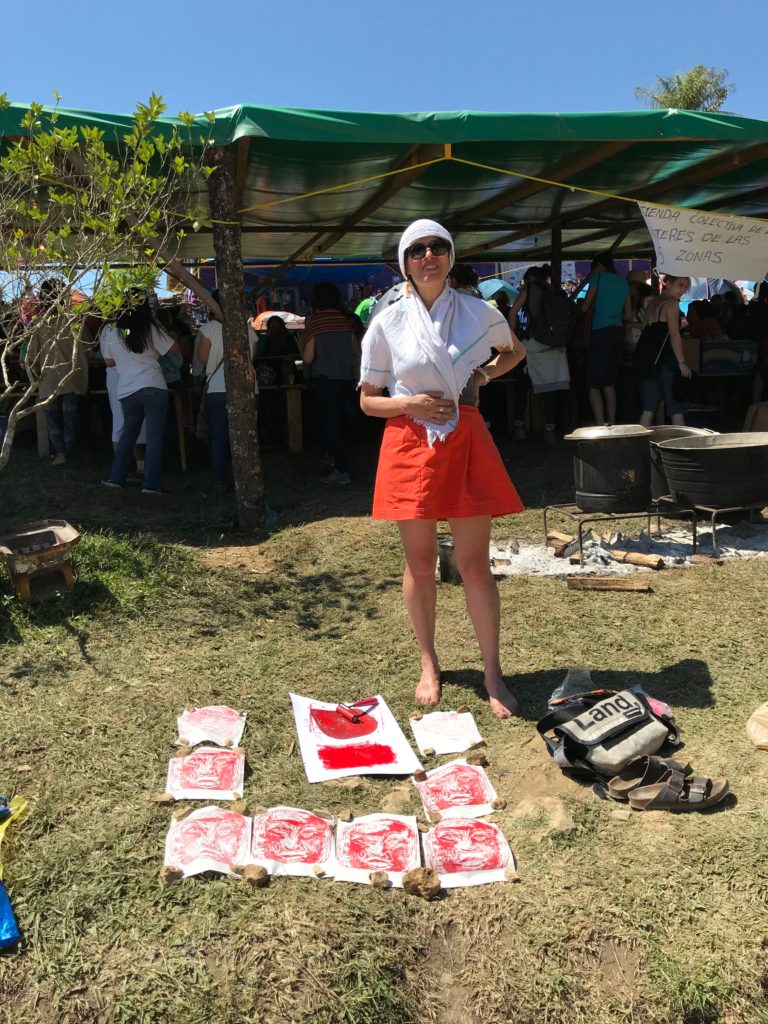
The 9th of March 2018 in the context of the “Political, artistic, sporting, and cultural International Congress of Women who Fight”, called by the Zapatista Army of National Liberation in Mexico, (EZLN) I proposed to the organizers of this event: to do an art demonstration and art selling of an engraving my father Eugenio Cornejo (1940, Santiago de Chile-2002, Puebla, Mexico) did as a refugee in socialist Bulgaria in 1977. The authorities of the autonomous organization granted me permission in 15 minutes and offered me a piece of cardboard and a public space to sell my engravings. I became part of the art market for the first time in my life in an autonomous community.
Artists: Marisa Cornejo and O’Maurice Mboa
Curated by: Eric Winarto
Venue: Galerie Listrik, Montreux, Switzerland
Dates: 13.–30.04.2017
Les œuvres des artistes invités Marisa Cornejo et O’Maurice Mboa s’inscrivent dans un large humanisme qui s’inspire de leurs propres expériences de l’injustice dans un monde en cruelle transformation. Ces fortes méditations plastiques, sensibles, réfléchies et clairvoyantes, répondent à un souci social, vital et culturel, qui recompose cultures, mythes, rituels et nature pour un retour possible et la transfiguration des sources profondes. Une création artistique qui dépasse l’immense et douloureuse vague d’injustices et de rupture partagées de notre temps. — Eric Winarto
Artist: Marisa Cornejo
Curators: Luz Muñoz and Mireia Sallarès
Venue: Espai 10, Laboratori de les Arts Contemporànies
Abaixadors 10 Local 1
08003 Barcelona, Espanya
Date: 12.07.2016, 8pm
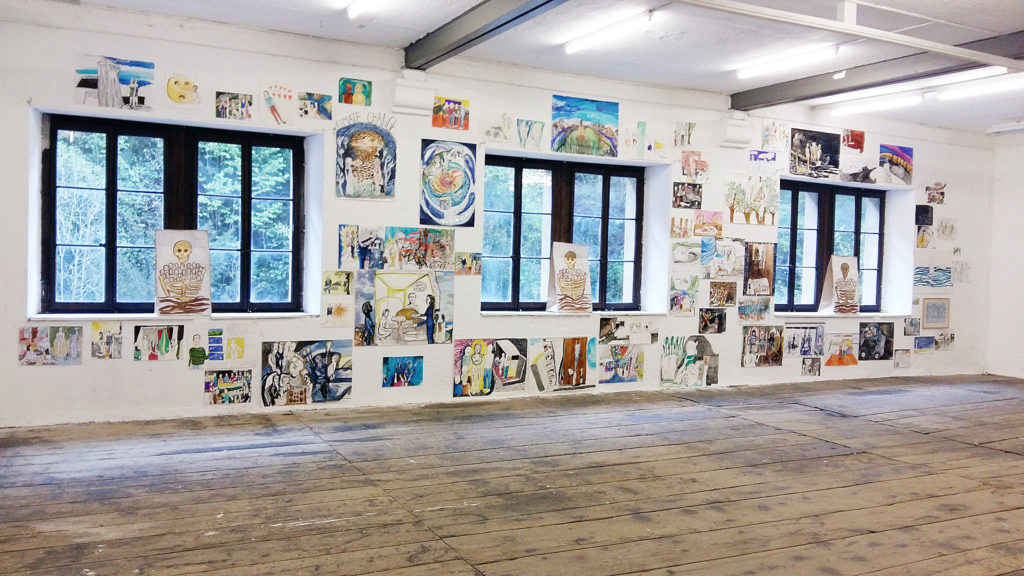
Espai 10: Laboratori de les Arts Contemporànies us convida el dimarts 19 de juliol de 2016 a les 20:00 h. a la performance que donarà pas a l’exposició A Big Bad Fish de l’artista Marisa Cornejo, una cartografia composta d’una performance i somnis dibuixats, un treball d’autoconeixement, consciència i de veu, a través del qual ha trobat un camí d’emancipació i descolonització.
In Espai 10, Laboratorio de las Artes Contemporáneas, the 19th of July 2016 Marisa Cornejo made a performance that gave birth to an exhibition : A Big Bad Fish : abstract universality a cartography composed by her drawn dreams. A work of self spiritual-knowledge, consciousness and voice with which she is building a road of emancipation and decolonization.
The project A Big Bad Fish, Abstract Universality, used Espai 10, a medieval small parcel of architecture in el Borne, in Barcelona, as the container of a narration of the experience of the zone of not being. In the space, the artist used a series of 54 drawings that Mireia Sallarès selected of her dreams. The common thread that united these drawings of dreams done between 2014 and 2016 was the link between security, womanhood and fear. During the performance that lasted 50 minutes, Cornejo gave voice to the words and images of the drawings while she was hanging them on the medieval walls of the galerie. In the narration of her dreams she unmasks the patriarcal, classist, racist and capitalist powers that are trying to hold her back in alienation as a migrant woman, just to discover that love, womanhood and friendship are the real values of life available for free all the time. The sarcasm and illogic of dreams shakes the false from the real.
Artist: Marisa Cornejo
Curators: Luz Muñoz and Mireia Sallarès
Venue: Espai 10, Laboratori de les Arts Contemporànies
Abaixadors 10 Local 1
08003 Barcelona, Espanya
Date: 12.07.2016, 8pm
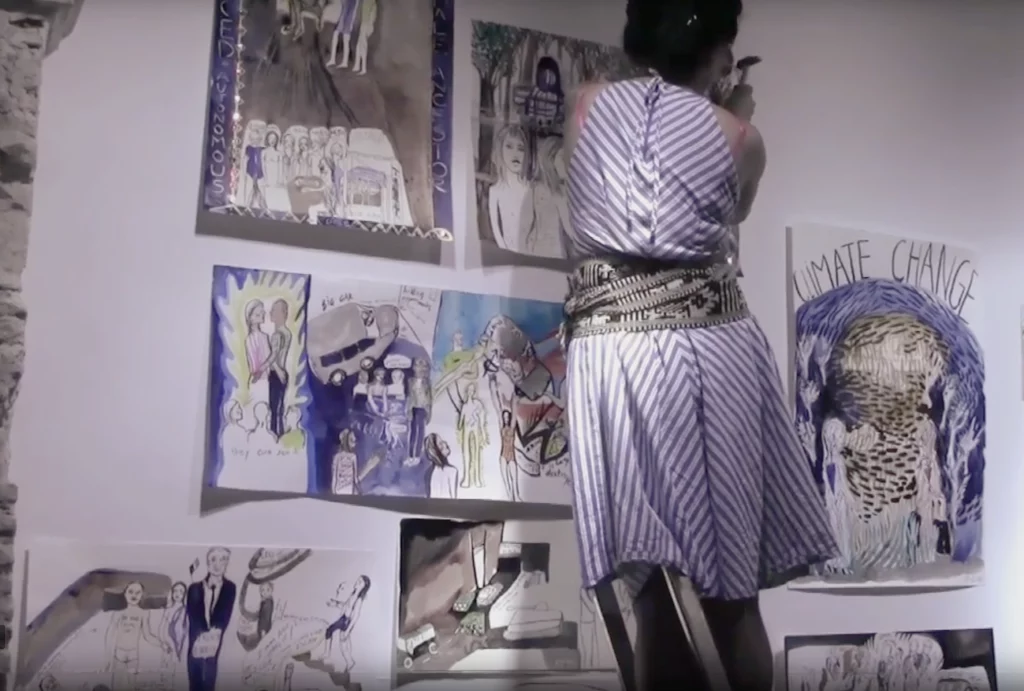
Espai 10: Laboratori de les Arts Contemporànies us convida el dimarts 19 de juliol de 2016 a les 20:00 h. a la performance que donarà pas a l’exposició A Big Bad Fish de l’artista Marisa Cornejo, una cartografia composta d’una performance i somnis dibuixats, un treball d’autoconeixement, consciència i de veu, a través del qual ha trobat un camí d’emancipació i descolonització.
In Espai 10, Laboratorio de las Artes Contemporáneas, the 19th of July 2016 Marisa Cornejo made a performance that gave birth to an exhibition : A Big Bad Fish : abstract universality a cartography composed by her drawn dreams. A work of self spiritual-knowledge, consciousness and voice with which she is building a road of emancipation and decolonization.
The project A Big Bad Fish, Abstract Universality, used Espai 10, a medieval small parcel of architecture in el Borne, in Barcelona, as the container of a narration of the experience of the zone of not being. In the space, the artist used a series of 54 drawings that Mireia Sallarès selected of her dreams. The common thread that united these drawings of dreams done between 2014 and 2016 was the link between security, womanhood and fear. During the performance that lasted 50 minutes, Cornejo gave voice to the words and images of the drawings while she was hanging them on the medieval walls of the galerie. In the narration of her dreams she unmasks the patriarcal, classist, racist and capitalist powers that are trying to hold her back in alienation as a migrant woman, just to discover that love, womanhood and friendship are the real values of life available for free all the time. The sarcasm and illogic of dreams shakes the false from the real.
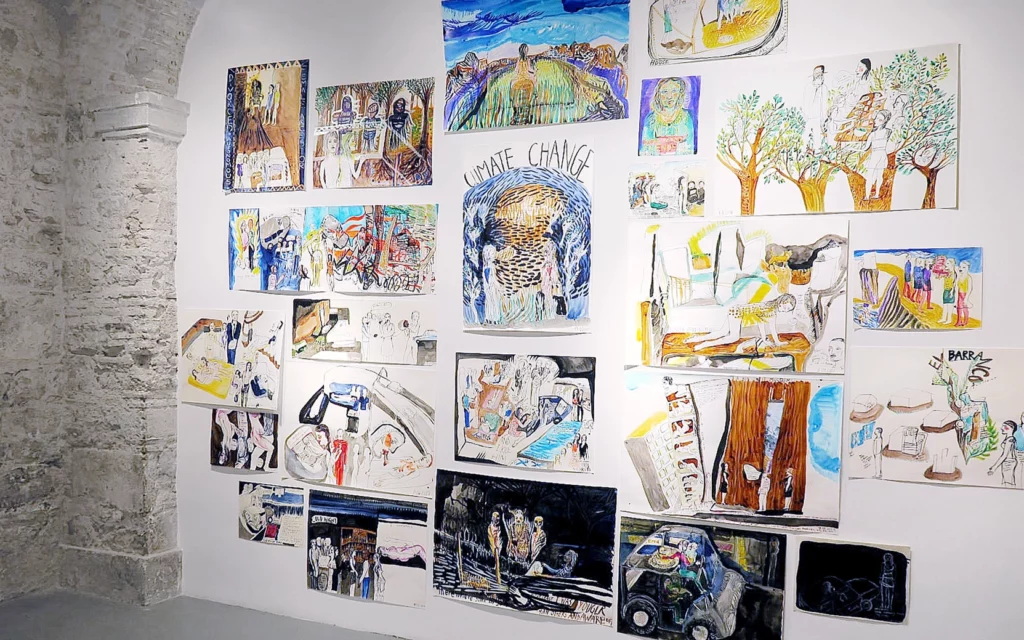
Artist: Marisa Cornejo
Curated by: Rodrigo Aldana and Stephanie Prizreni
Venue: Espace Kugler, Geneva, Switzerland
Date: September 2015
Open House, est une installation originale de l’artiste chilienne Marisa Cornejo, largement inspirée de l’article d’Aminata D. Traoré: «Ce sont nos enfants» paru dans le Monde Diplomatique en septembre 2015.
Dans cet article, Aminata D. Traoré nous rappelle que «des milliers de kilomètres de murs sont en train d’être érigés pour séparer les peuples en les dressant les uns contre les autres, alors qu’ils seraient capables d’empathie, de fraternité et de solidarité véritables s’ils se savaient broyés par le même rouleau compresseur(1)». Rouleau compresseur «que la mondialisation néolibérale inflige à tant et tant d’humains de par le monde(2)». Un système qui d’un côté facilite l’exploitation des ressources naturelles par des multinationales sans restriction et qui entrent en compétition directe avec les peuples autochtones qui ne peuvent plus avoir un revenu dans leurs communautés d’origine.
«Aux injustices et aux frustrations engendrées par ces accords de pêche s’ajoutent l’assignation à résidence et l’humiliation liées à des accords migratoires injustes et déshumanisants(3).»
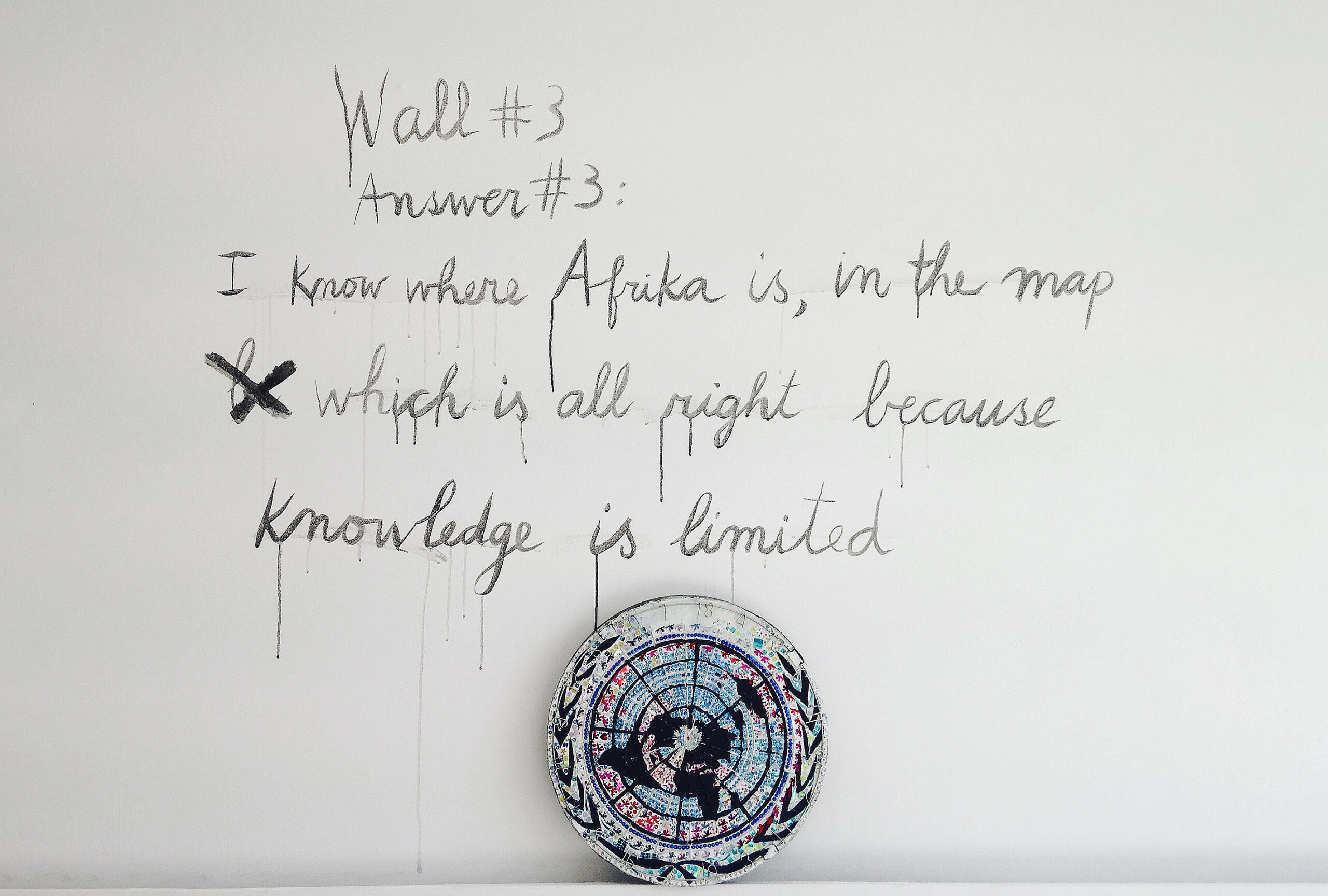
Dans l’exposition Open House, le curateur Rodrigo Aldana nous invite dans une zone spécifique pour répondre à un questionnaire particulier : Allons-nous tous devenir des réfugiés ? Oui, Non, ou peut-être ou dans une autre vie…? Le spectateur devine au travers des questions dans quelle zone de la (néo)colonisation il se situe, s’il est un damné ou un être avec des droits humains à part entière (suivant la pensée de Fanon dans son livre Peau noire, masques blancs, 1952).
Dans cette installation composée de dessins, de peintures et d’objets, Marisa Cornejo partage l’expérience autobiographique d’une existence dans la zone du « non-être », au travers de rêves anciens et récents, qui donnent forme à cette sorte de questionnaire ouvert à tout le monde. L’exposition engendre un dialectique avec le spectateur: est-ce là le seul avenir de l’Europe que de devenir une sorte de questionnaire ouvert et permanent pour catégoriser les personnes et les populations? — Stéphanie Prizreni
(1-2-3) Aminata D. Traoré, «Ce sont nos enfants», Le Monde Diplomatique, N°738, septembre 2015
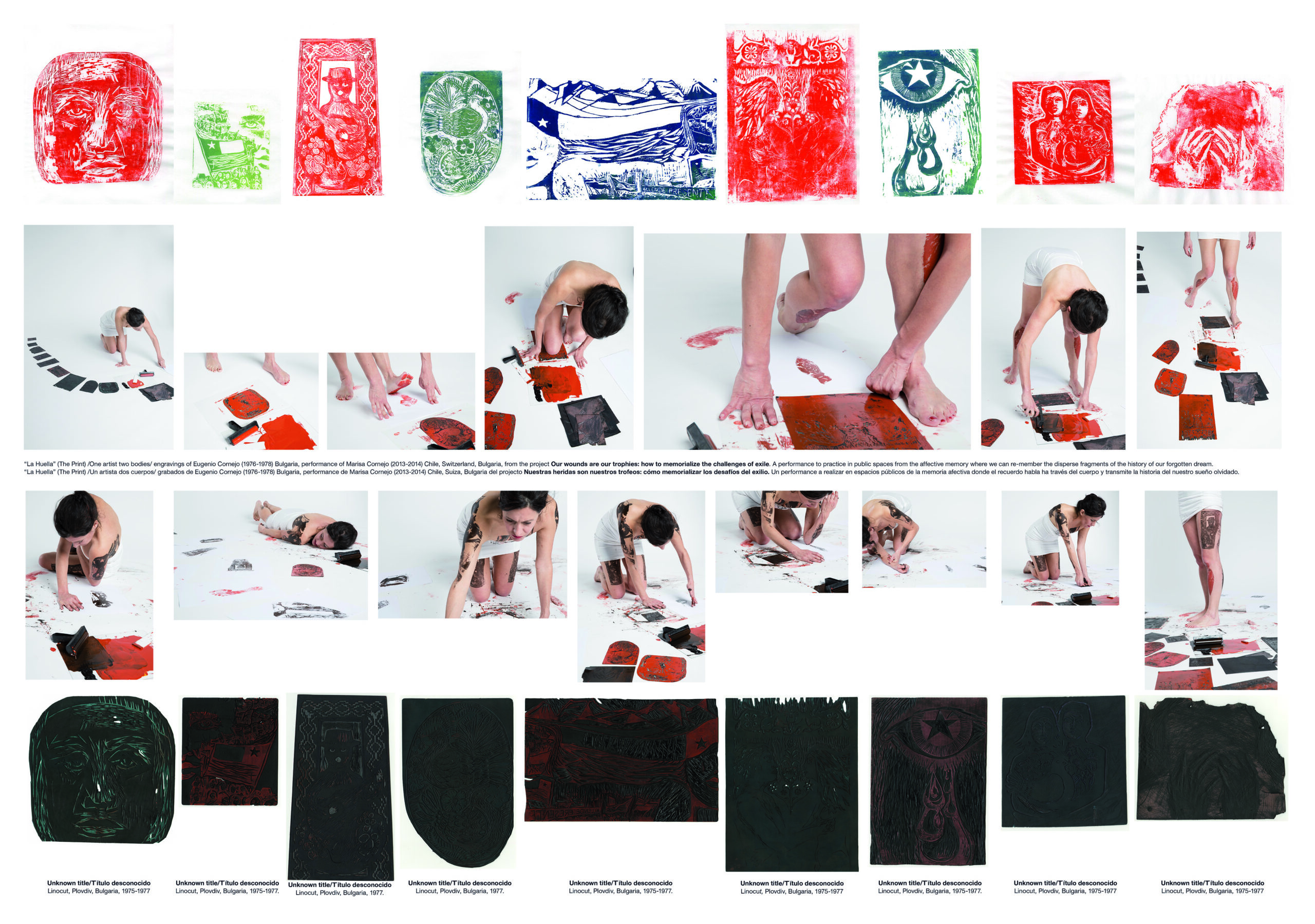
Poster La Huella
Photography: Baptiste Coulon and Rebecca Bowring
Description: ink print on paper, 70 x 90 cm
Date: 2014