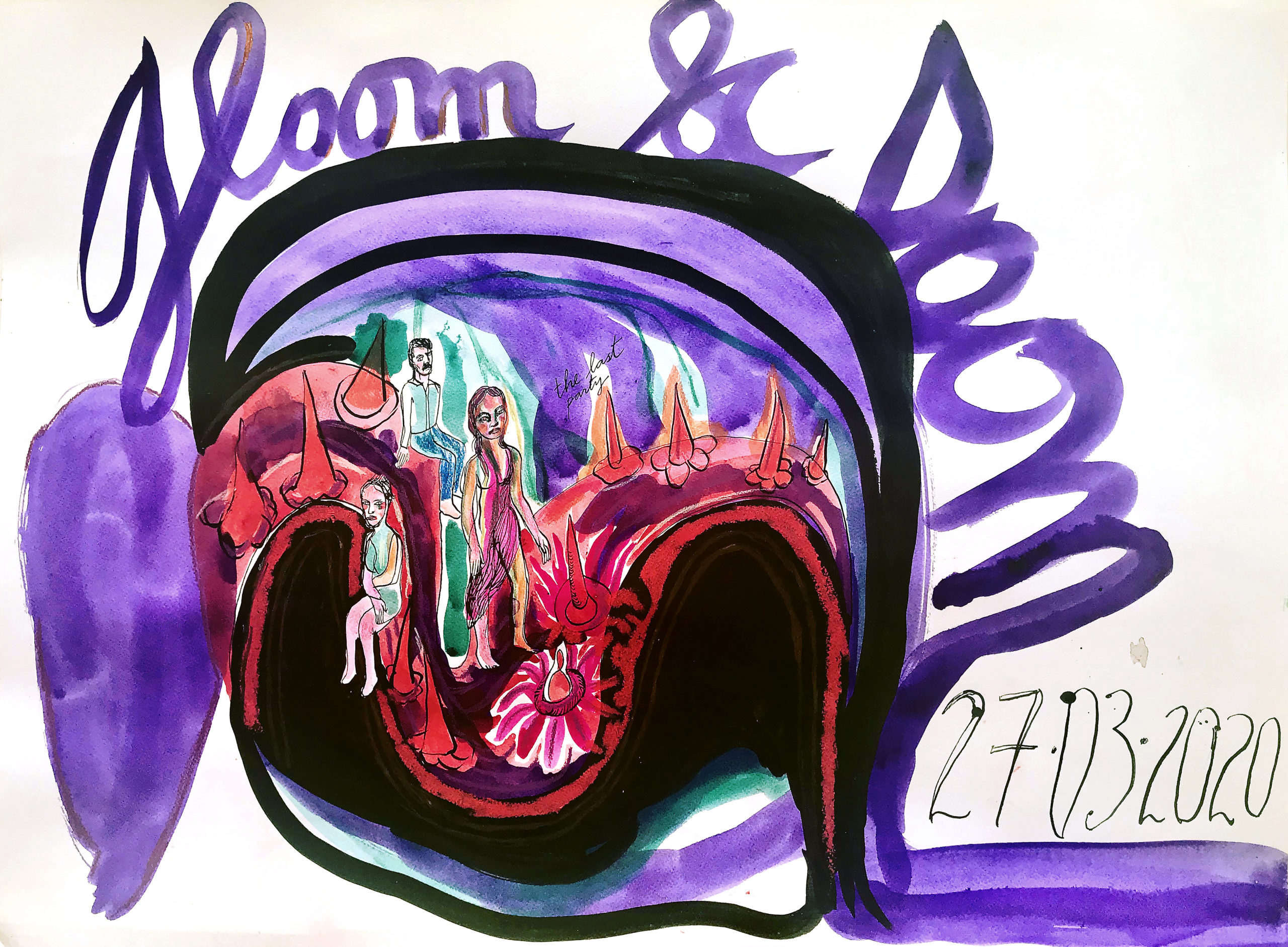

Research artist in the fields of memory, identity and migration
Artist: Marisa Cornejo
Documentation: Indoors
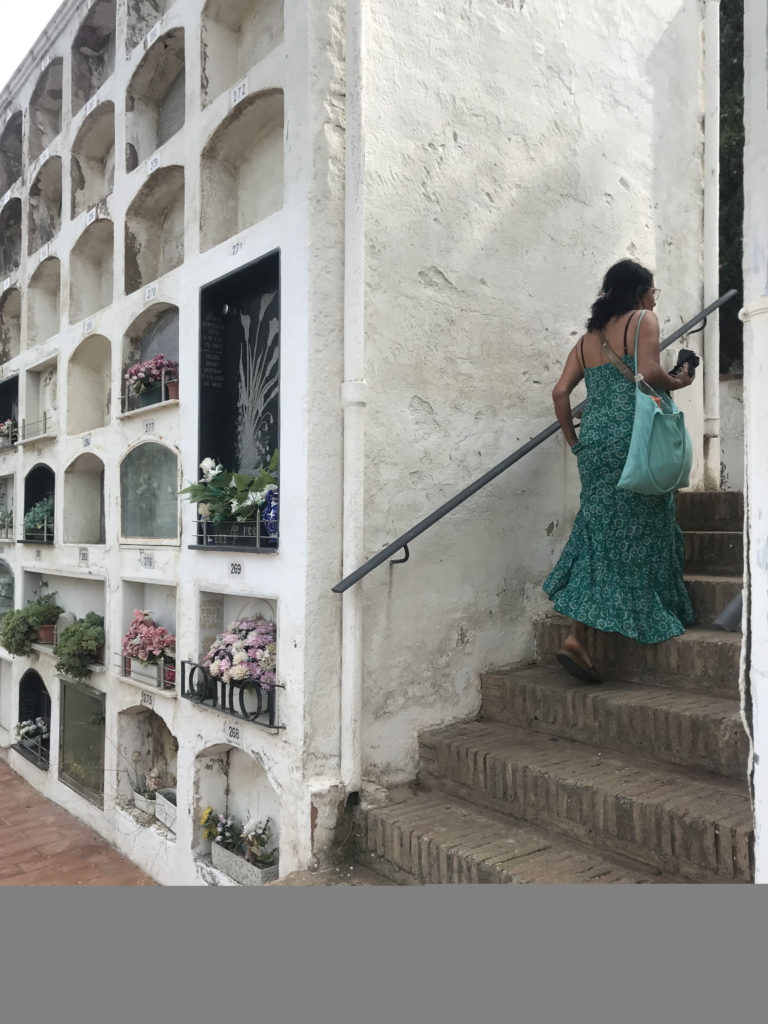
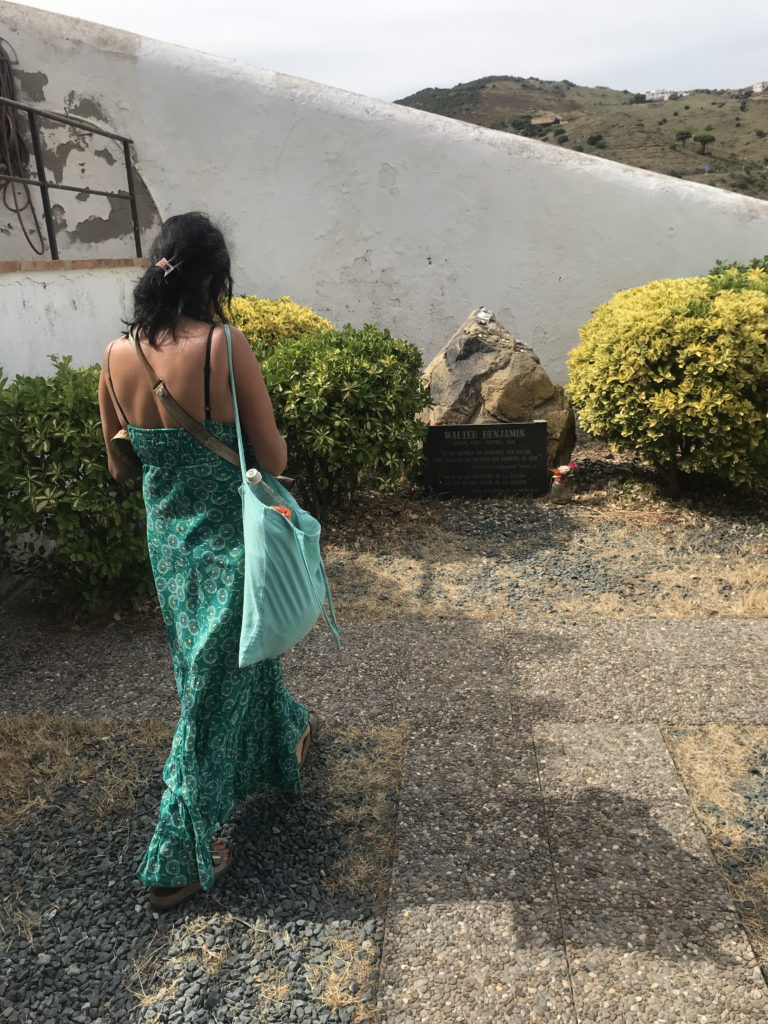
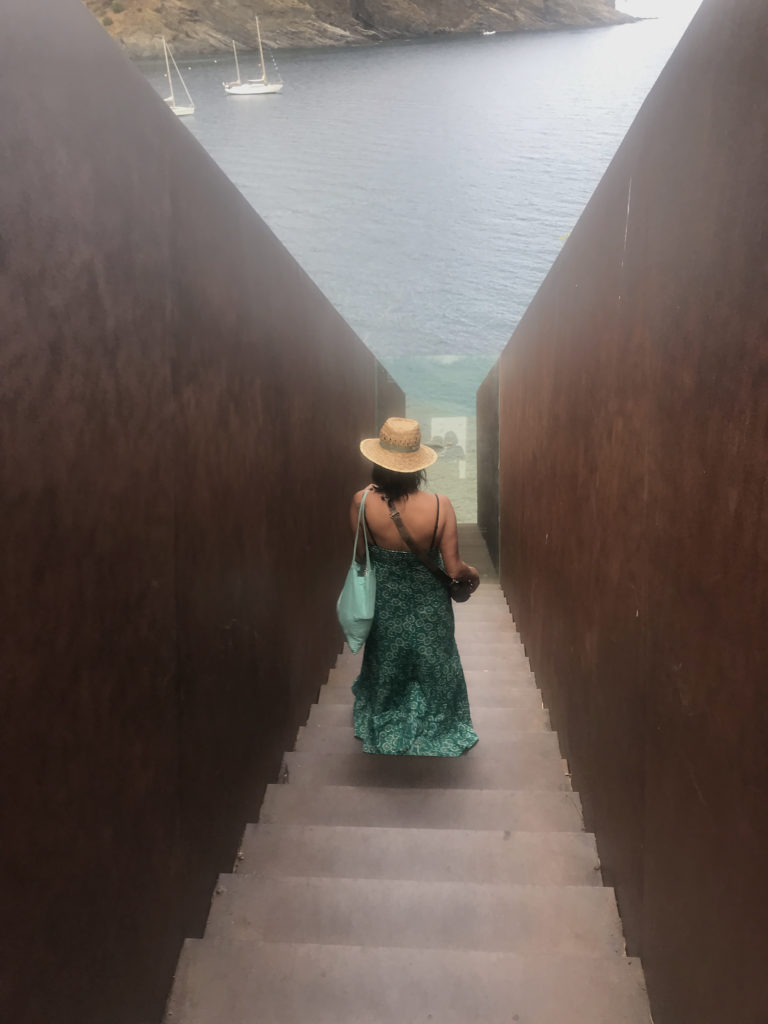
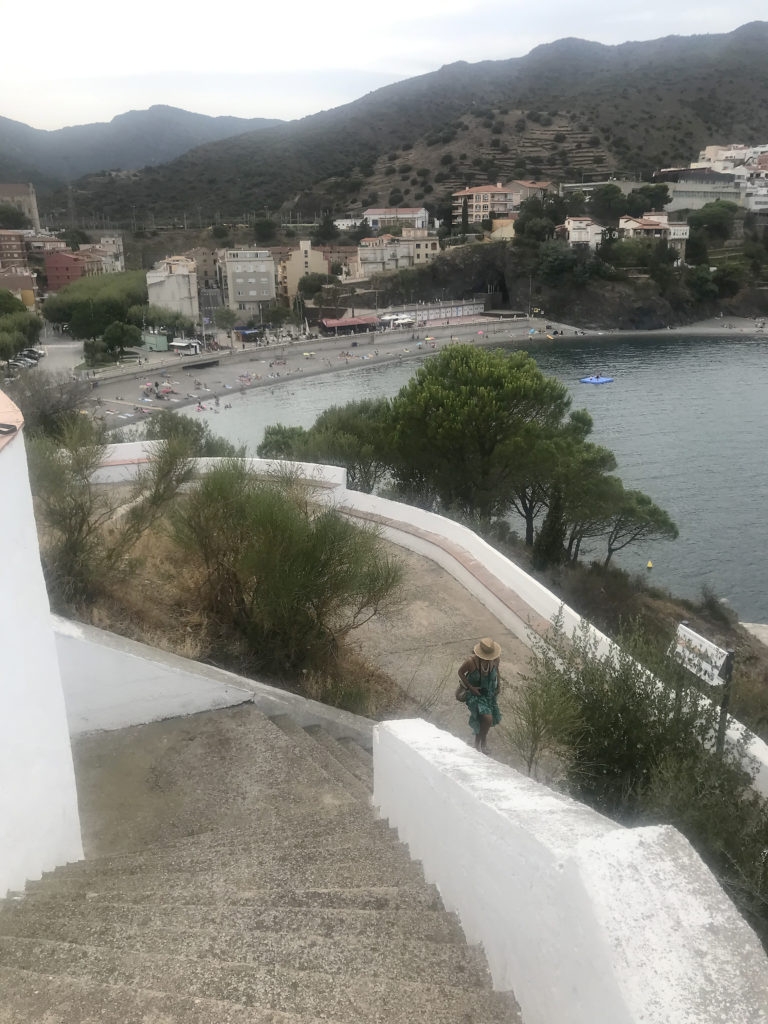
Venue: Portbou, Catalunya:Cementiri municipal / Memorial Walter Benjamin / Badia de Portbou
Date: August 10, 2021
«Le mouvement du Cygne est celui d’un berceau qui se balance entre la modernité et l’antiquité.» Walter Benjamin
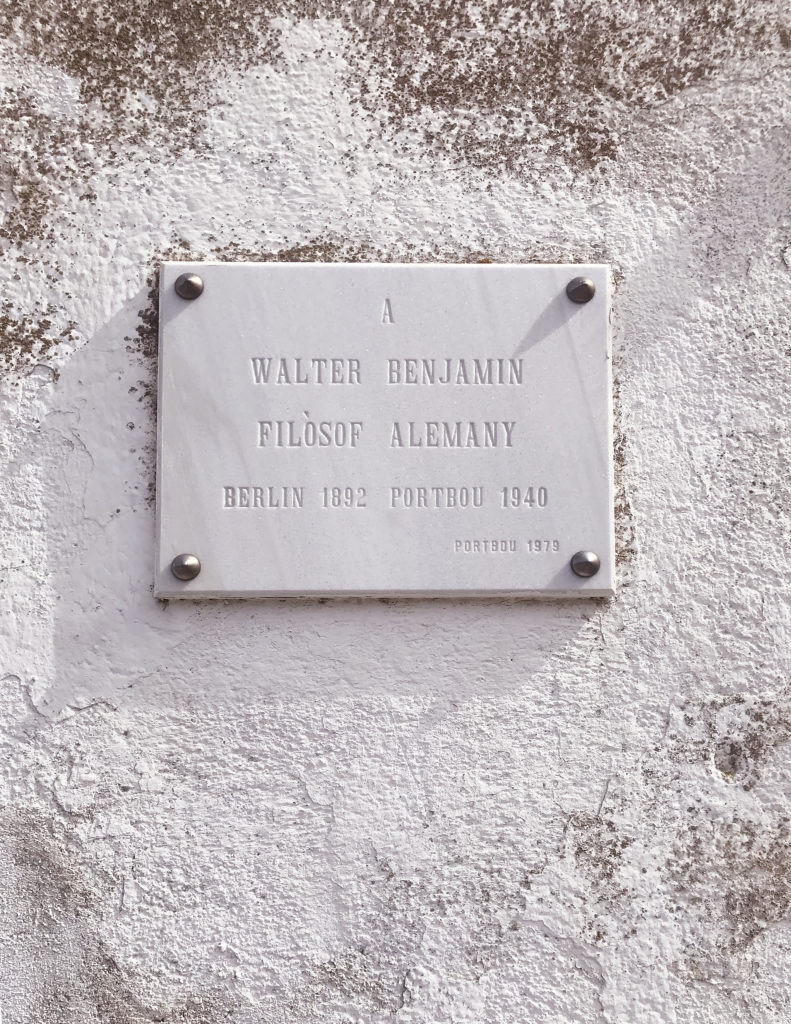
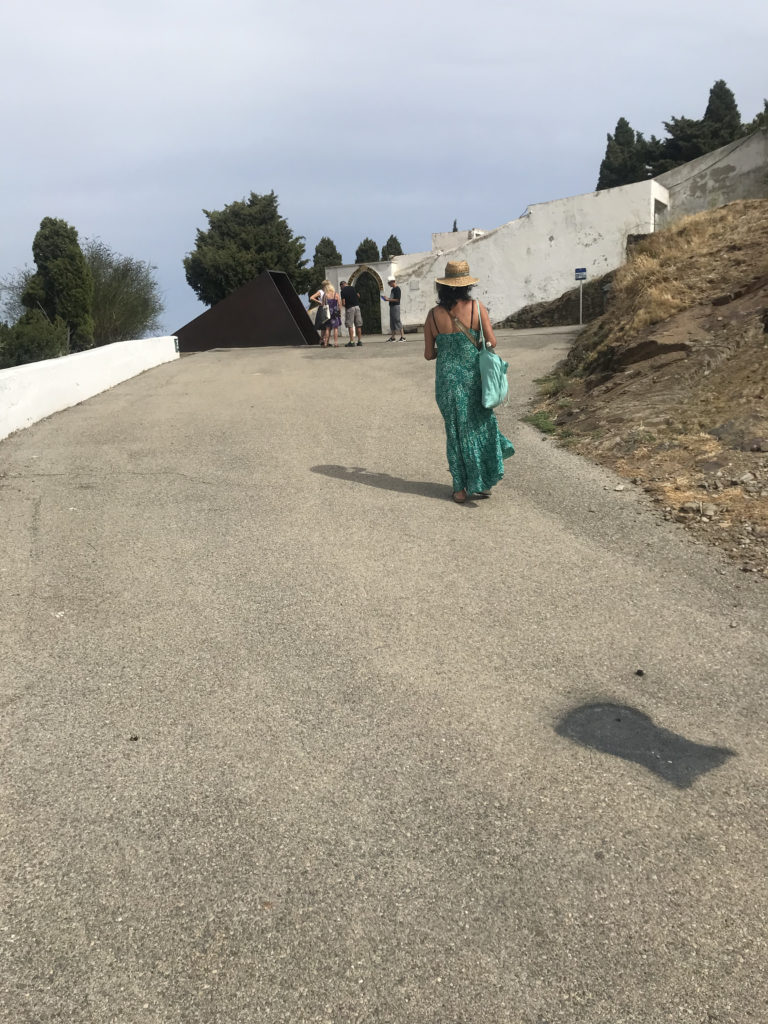
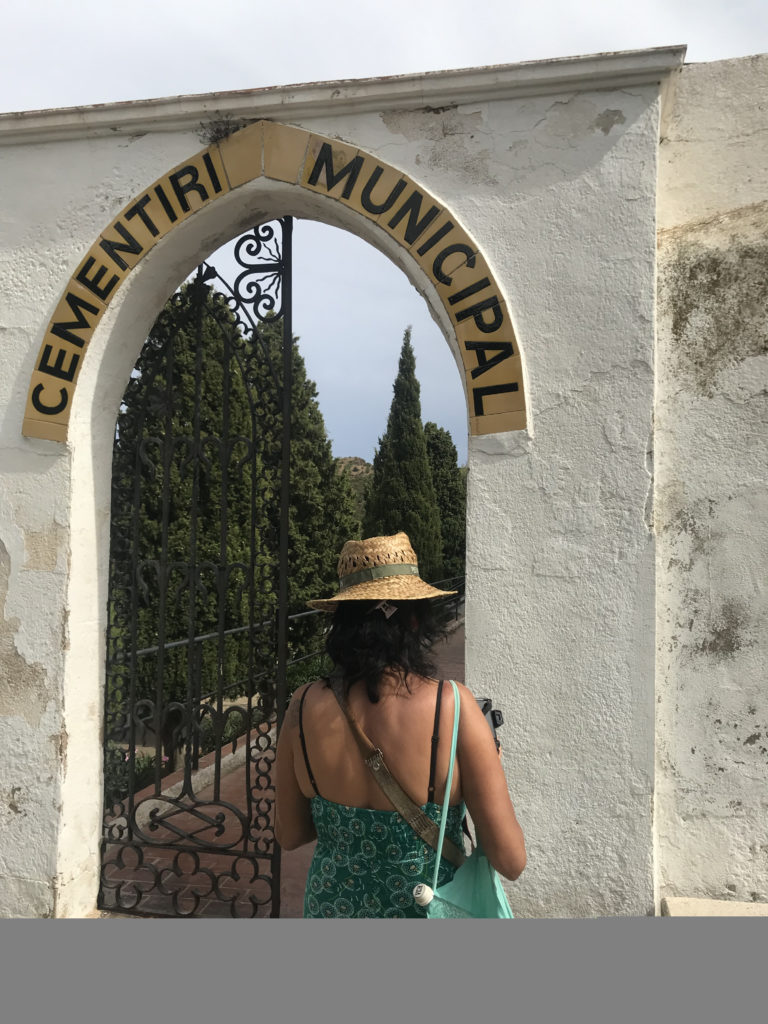
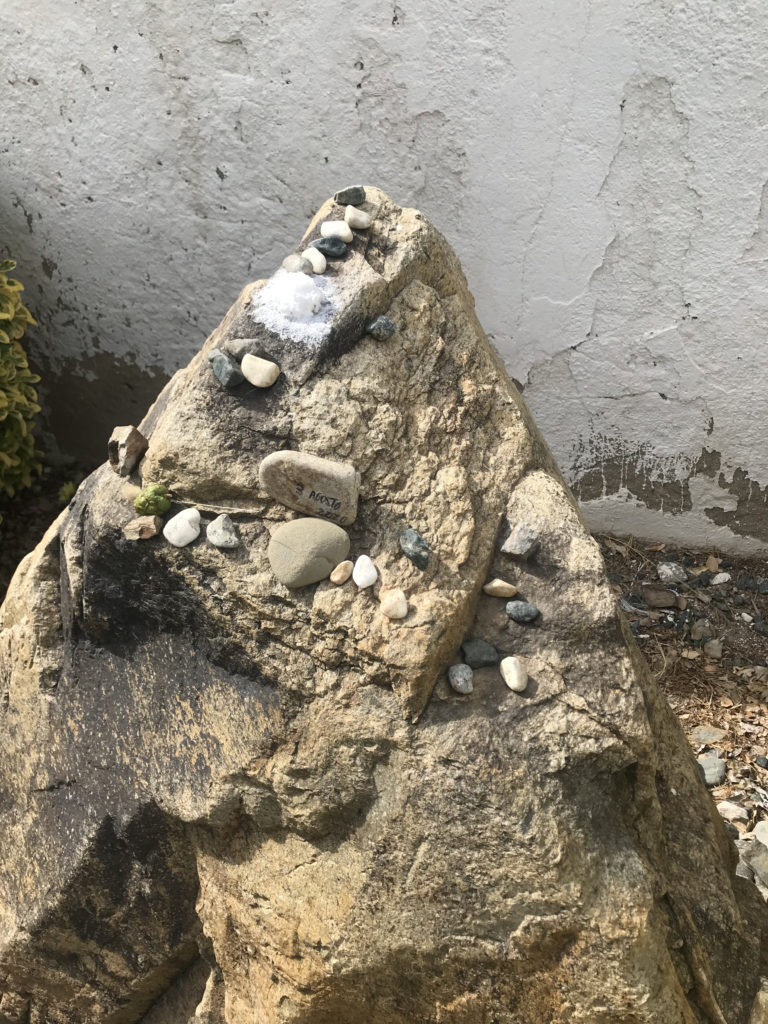
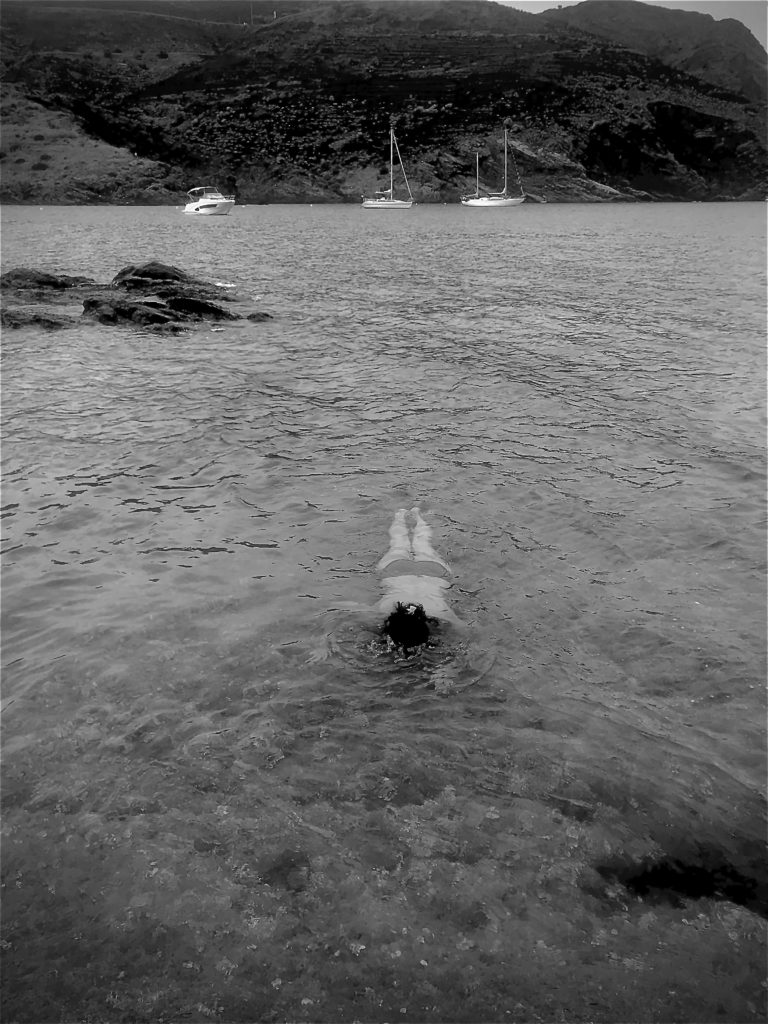
L’action se déroule en quatre phases: montée au Cementiri municipal, larmes sur la tombe de Walter Benjamin, descente dans le Memorial Walter Benjamin de Dani Karavan, immersion dans la badia de Portbou. Elle peut être interprétée comme une lecture de Le cygne de Baudelaire, où M.C. incarnerait le double Andromaque / cygne, une bouteille de Vichy Catalan représenterait le fleuve Simoïs et les larmes, et le cimetière de Portbou la Place du Carrousel.
Elle marque en tout cas l’instant et le lieu d’une réminiscence où la dilatation temporelle – du temps mythique des larmes versées dans la Méditerranée au temps historique de la guerre où Walter Benjamin trouva la mort à cet endroit – embrasse le cours entier des catastrophes humaines, par la plongée dans un immense chagrin de veuve versant «ses larmes dans les eaux d’un fleuve qui n’est plus le Simoïs des temps heureux, mais bien un lieu d’exil[1]».
[1] Remerciements à Franca Zanelli Quarantini pour sa lecture éclairante du Cygne de Baudelaire qui a servi de texte à l’action.
Artist: Marisa Cornejo
Curated by: Valeska Romero Curiqueo & Cecilia Moya Rivera
With the help of: Stéphanie Pfister, Jesssica Vaucher, Valeska Romero Curiqueo & Cecilia Moya Rivera
Venue: EEEEH! La Grenette, Nyon
Date: 29.04.2022
In the catastrophe of modernity/coloniality, lands are taken from people who are not considered people while the dispossessed, murdered, raped, and tortured non-people and everything related to them—their creations, habitats, and even self-perceptions—become the targets of endless wars. Fanon concluded that “colonialism cannot be understood without the possibility of torturing, of violating, or of massacring. Torture is an expression and a means of the occupant-occupied relationship”
Nelson Maldonado-Torres
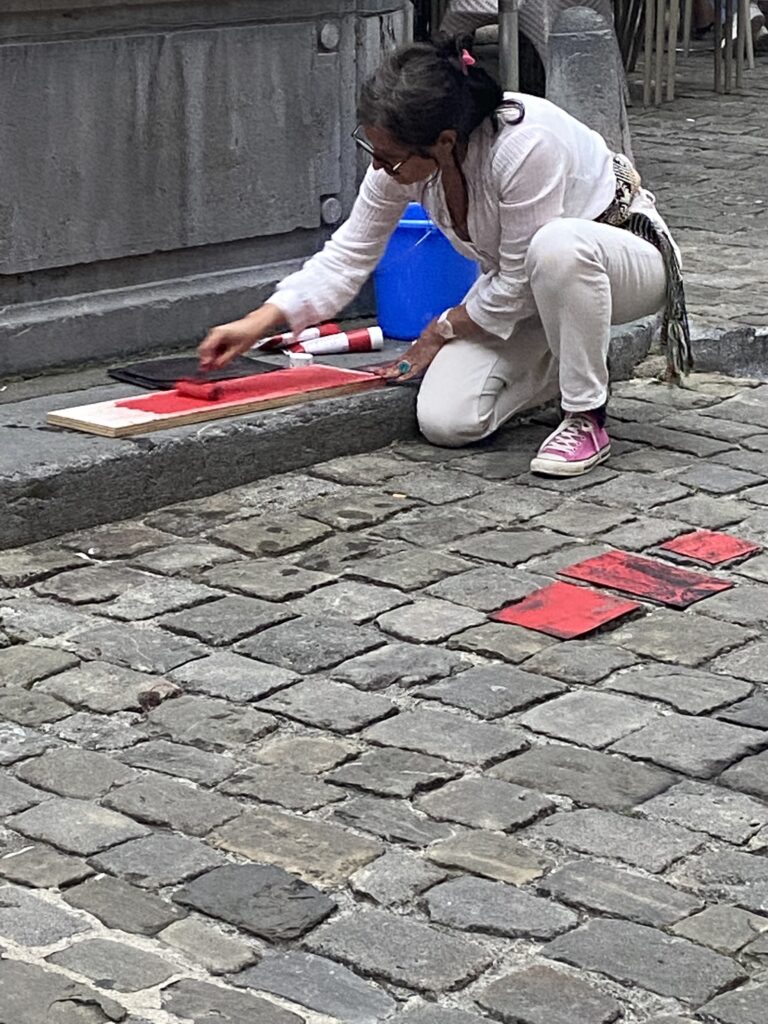
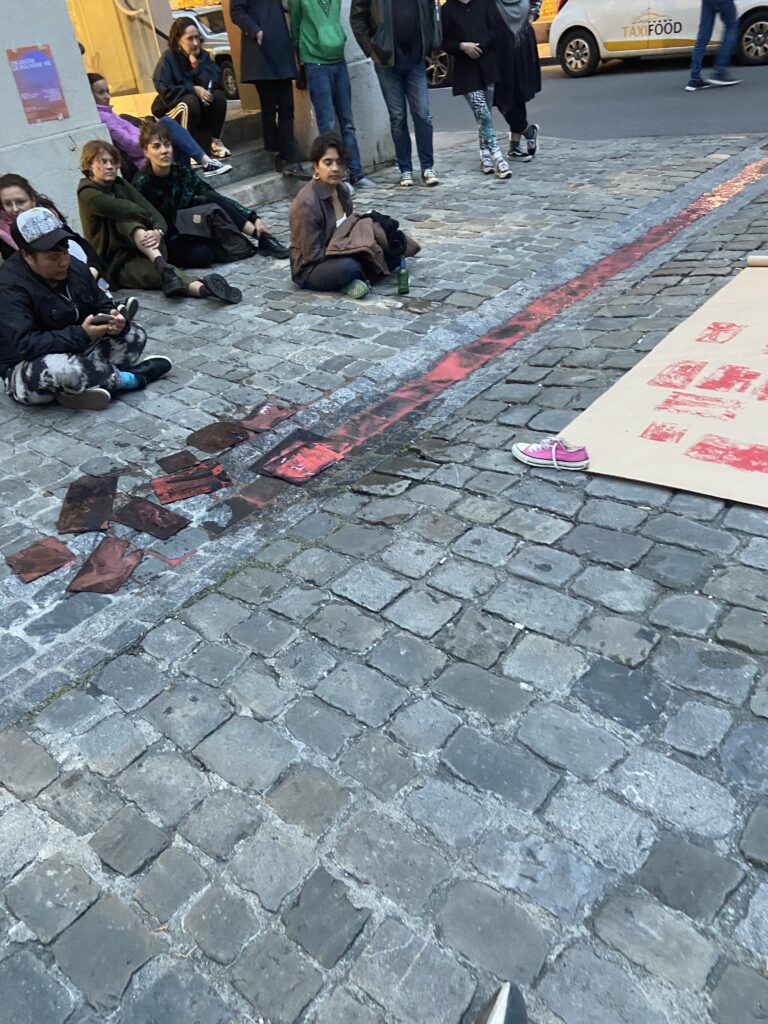
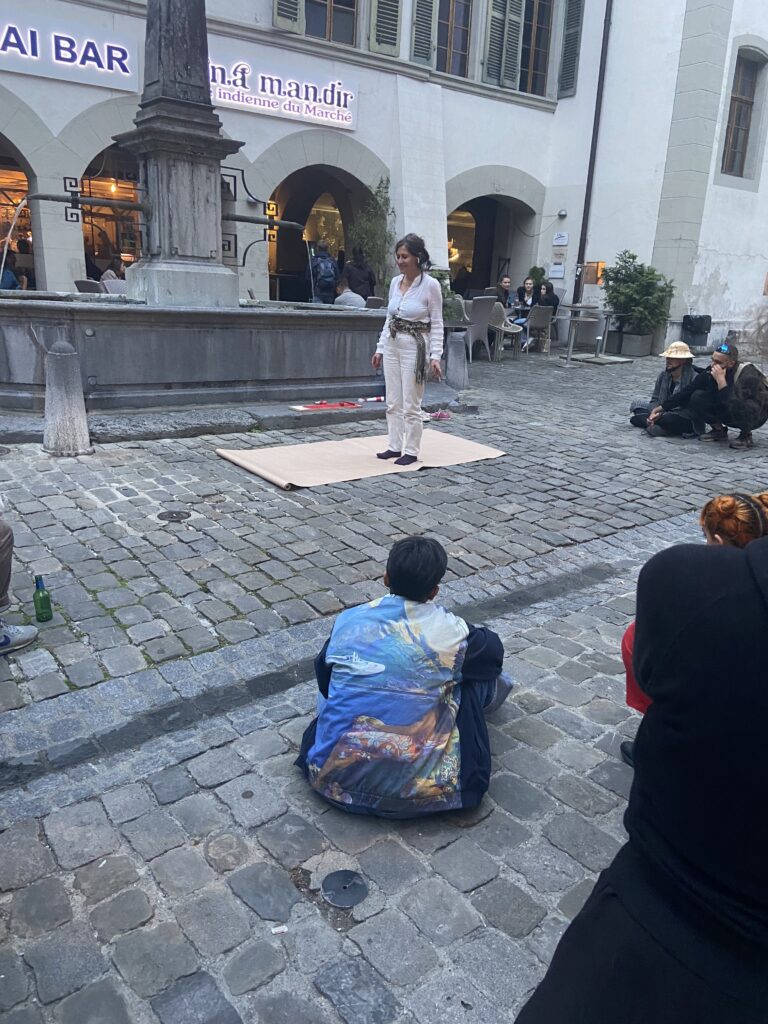
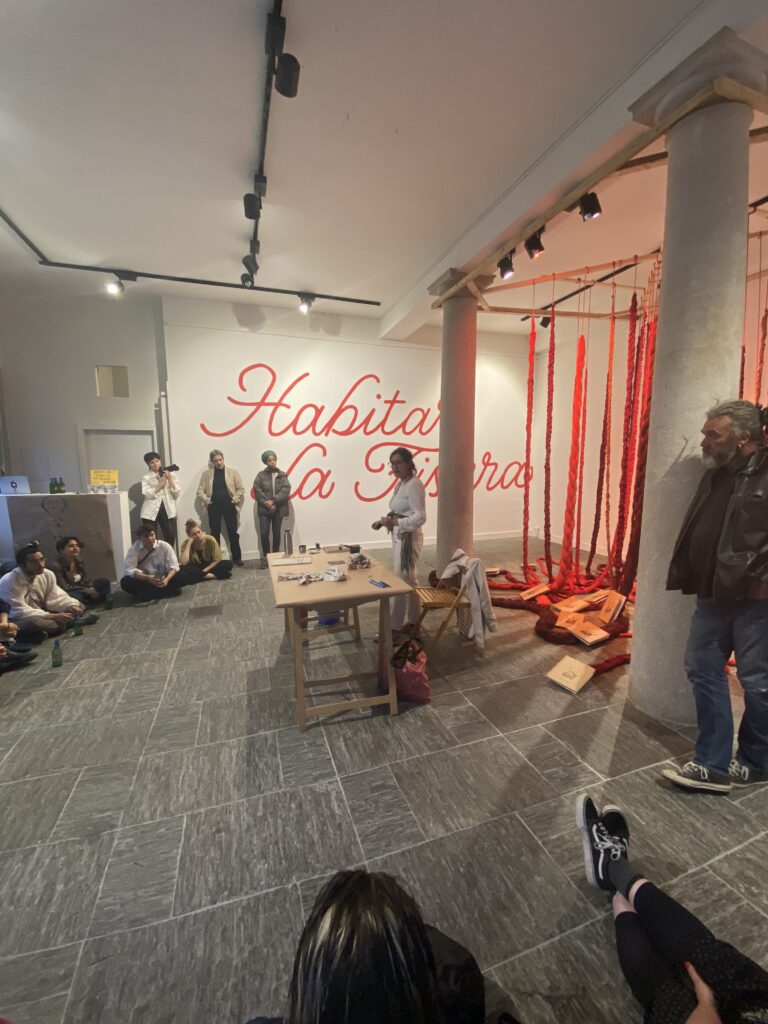
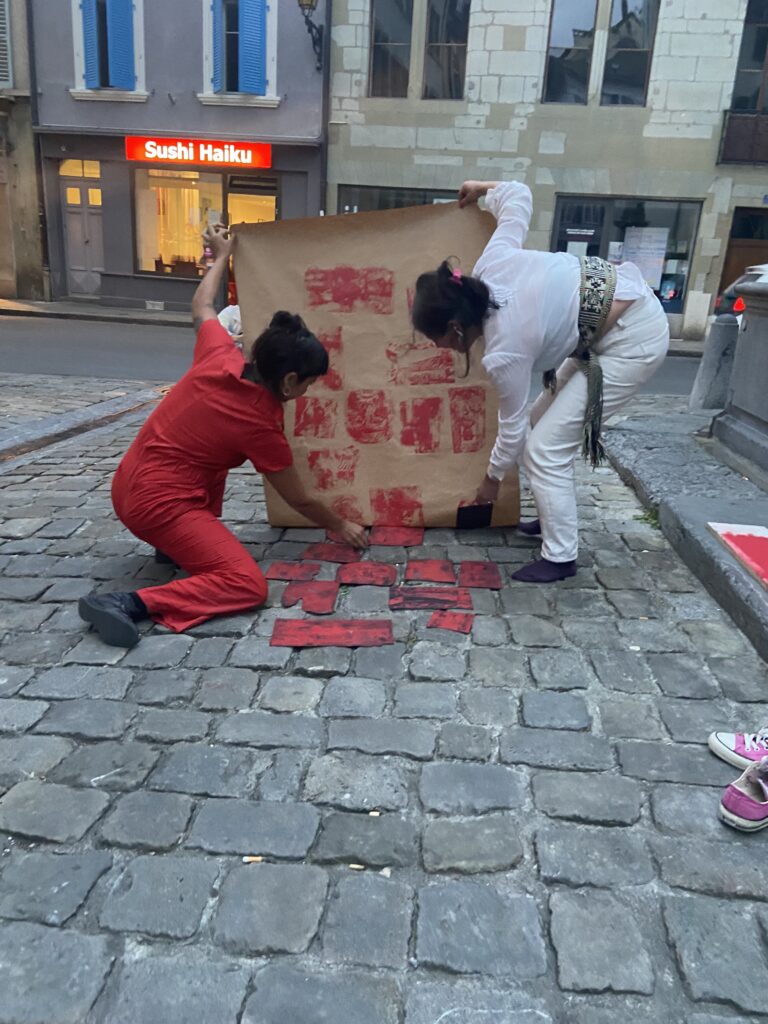
In 2013 I performed a series of ritualistic performances called La Huella in Santiago de Chile, Geneva, Switzerland and Plovdiv, Bulgaria, where I reactivated objects from the archive of exile I inherited from my childhood. For this project I would like to do a performance called “A counter catastrophic performance : how not to normalize torture”.
For this, I will print in front of the public in a table or the floor, a series of engraving plates my father Eugenio Cornejo made after he survived prison and torture during the regime of Pinochet and was in exile in Bulgaria in the 70’s trying to process the trauma and memorialize the horrors with his art practice.
Once I finish reprinting my father engravings, I will clean the engraving plates with pure water as a ritual. During the cleaning of the engravings plates, I will share some memories that emerge in my memory from the archive.
Estrella verde
Santiago de Chile / Madre Selva — 12.2019–12.2022
Duration: 17:03
Images / sound: Marisa Cornejo
Collaboration: Nora Gatica Krug / Stéphane Fretz
Voices: Mónica Pizarro, Inés Erazo, Nadia Poblete, Maria Rosa Verdejo, Semiramis Lobos, Lissien Corvalán and Lena Kirberg.
Editing and mixing: Roberto Duarte
Size: 16:9, ultra HD
Lenght: 5:21
Images / sound: Marisa Cornejo
News footage: CNN, 13.03.2021
Fixer: Joaquin Figueroa
Editing: Stefan Fretz
Many thanks to: Gene Ray, Anna Papaeti, Joaquin Figueroa, Maximo Corvalán Pincheira, Mireia Sallarès, Nora Gatica Krug, Katya Kasterine, Ana Maya Kasterine, Miguel D. Norambuena
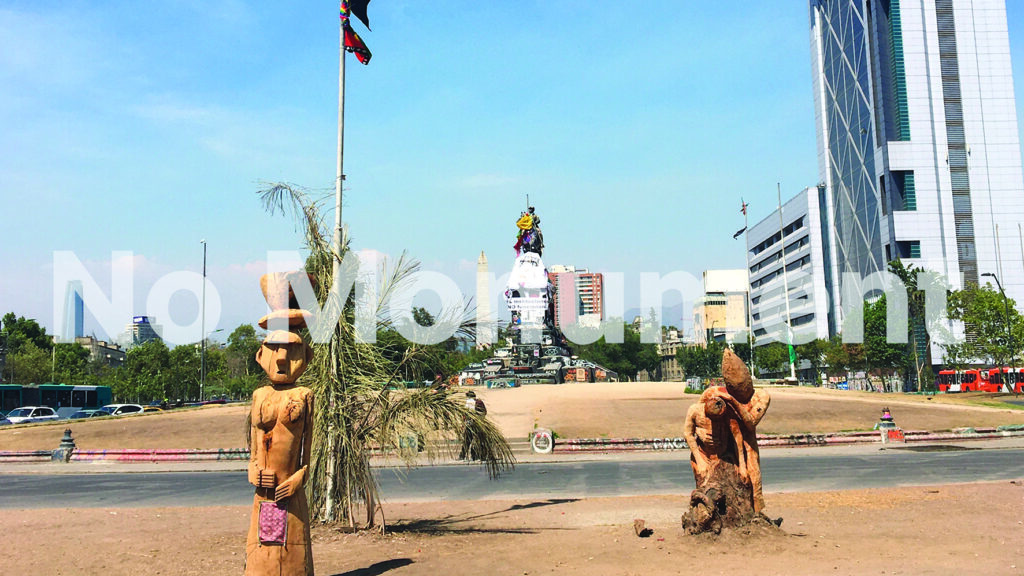
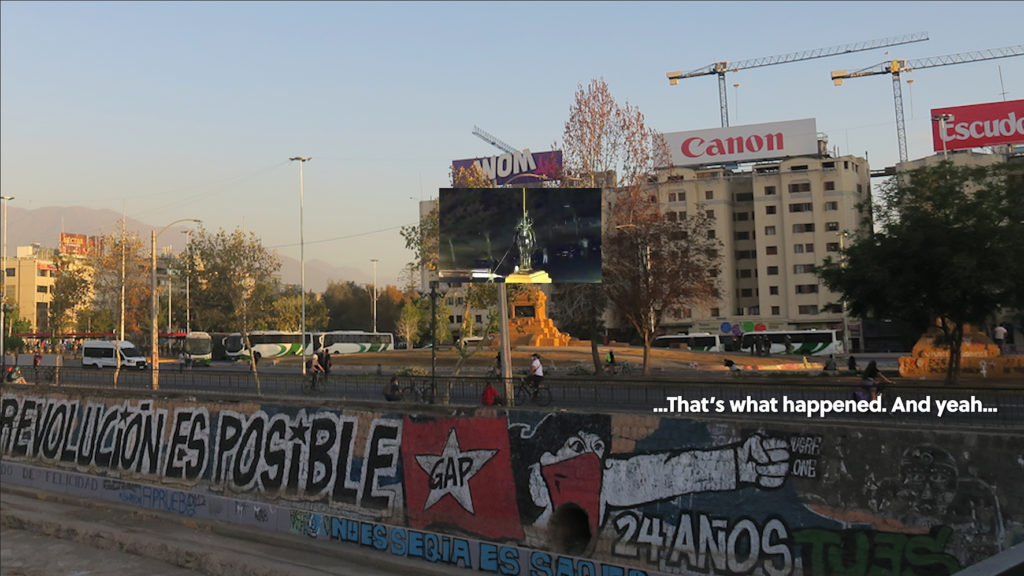
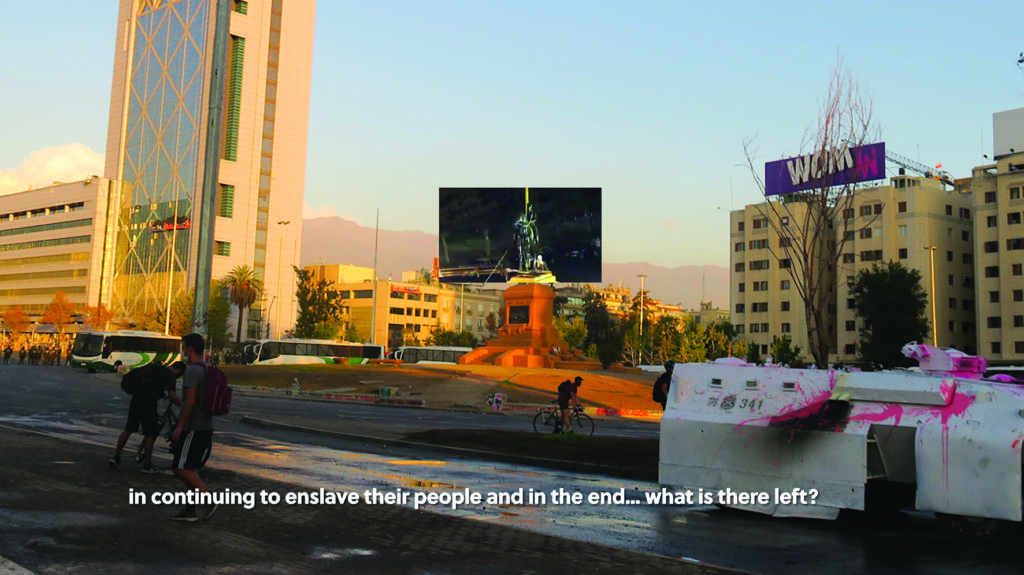
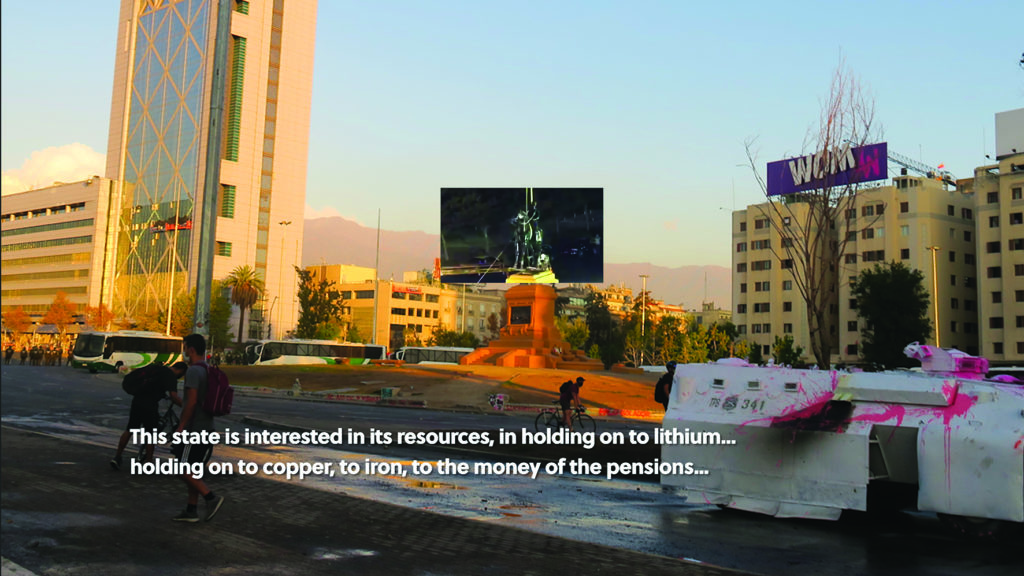
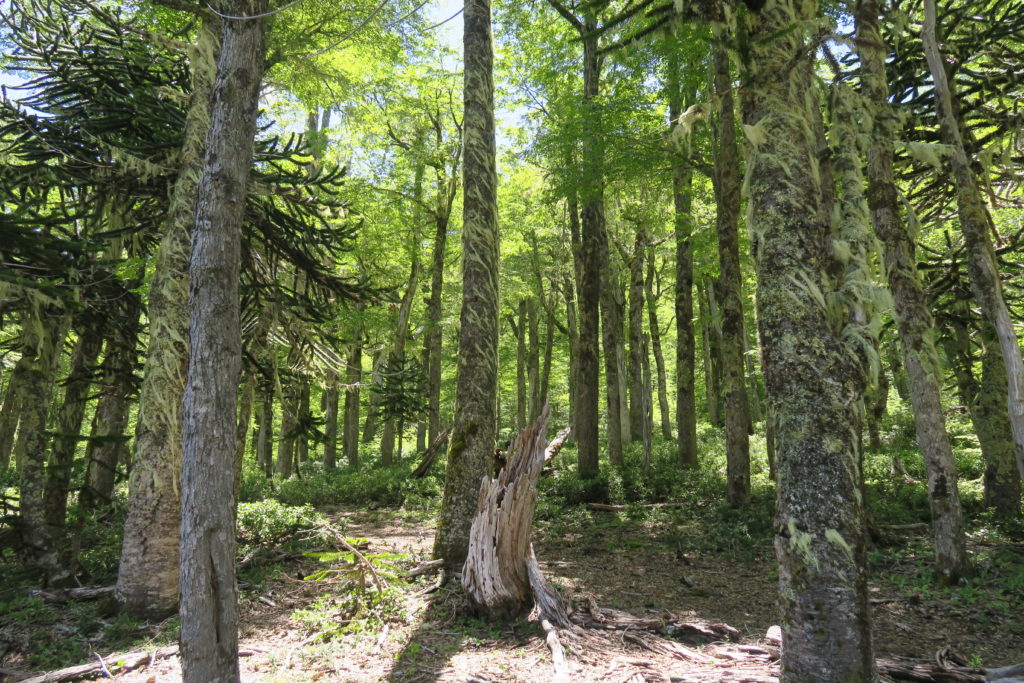
Plaza Italia, now Plaza de la Dignidad, is since October 18, 2019
the epicenter of a social outbreak in Santiago de Chile.
In the early hours of Friday, March 13, 2021, the statue on the center of the square was withdrawn.
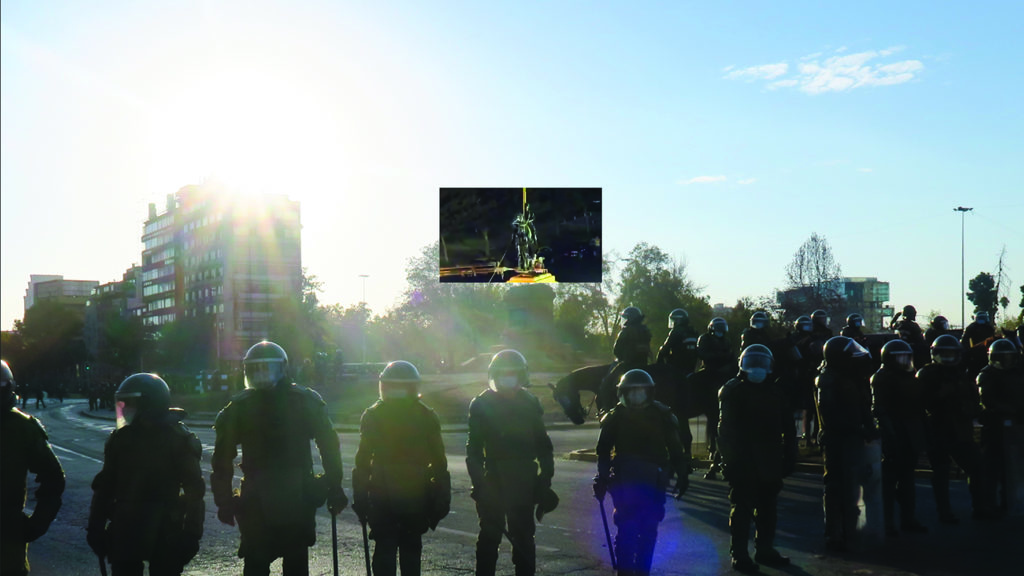
These images were filmed a few hours later as protesters returned to Plaza de la Dignidad, risking serious damage to their health and physical integrity by tear gas and other police measures.
Diplômée en 2014 du CCC, l’artiste et activiste Marisa Cornejo a réalisé un film qui revient sur les événements de Plaza Italia à Santiago, renommée Plaza de la Dignidad depuis le 18 octobre 2019. Pendant plusieurs semaines, des manifestant·e·s s’y sont rassemblés face à la répression policière pour réclamer une meilleure justice sociale et l’abrogation de la Constitution héritée du régime d’Augusto Pinochet. La statue du général Baquedano qui trônait au centre de la place a été retirée par le gouvernement le 13 mars 2021 après les déprédations intervenues sur ce symbole des divisions chiliennes. Héros militaire pour certain·e·s, génocidaire de populations indigènes pour d’autres, Baquedano s’en est allé au milieu de la nuit, par la petite porte. Cornejo s’est associée à sa fille Katya Kasterine et à Cecilia Moya Rivera (étudiante du CCC) pour adosser le film à un essai à plusieurs voix, un journal de bord de la contestation – publié en anglais et en espagnol. Ensemble elles retissent la mémoire d’un pays traversé par de multiples conflits, espérances, violences et inégalités, dont la présence absente de la statue du général devient le leitmotiv.
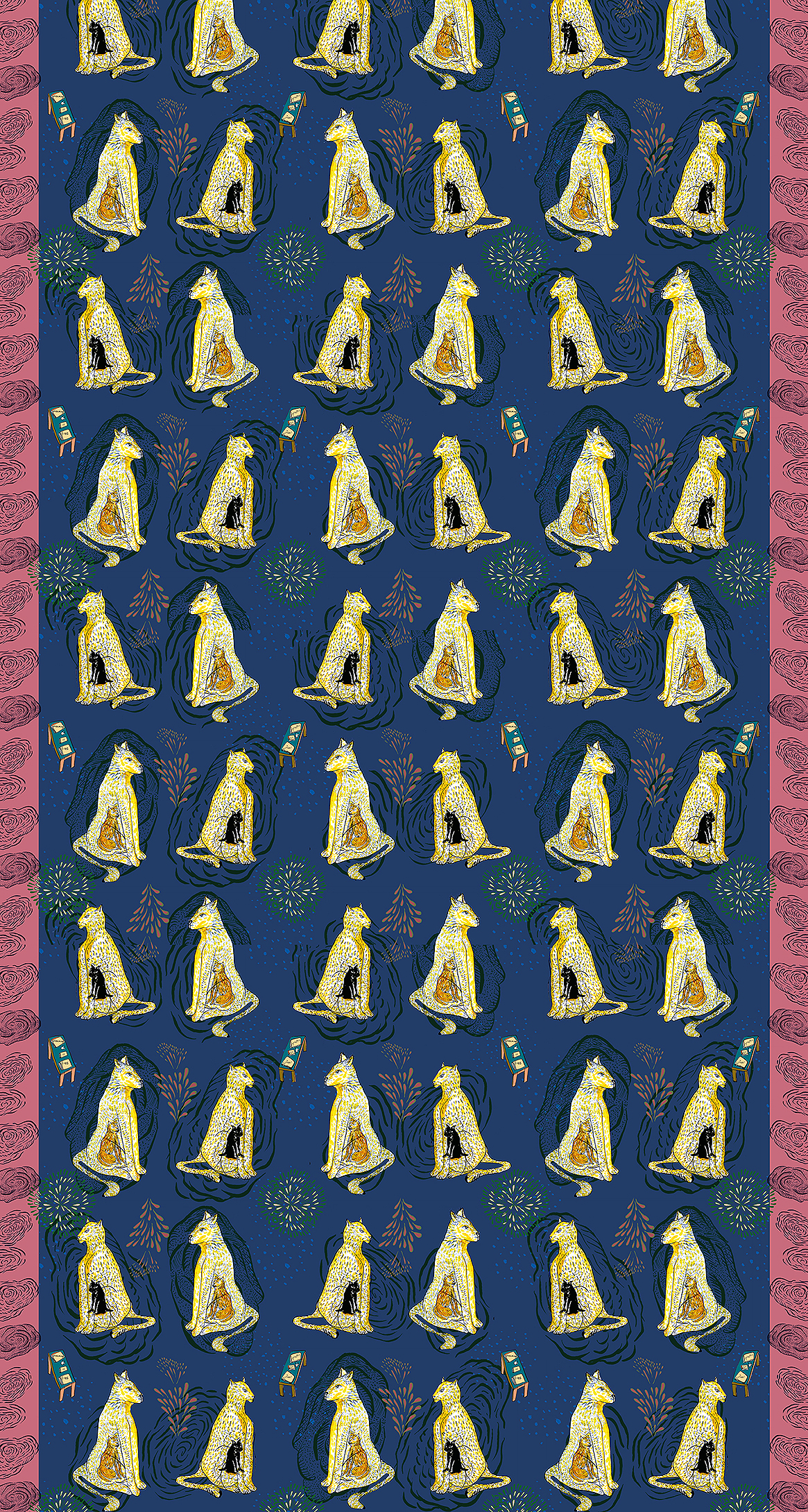
Print: God Cats
By: Marisa Cornejo and Stefan Fretz
Description: print on popeline cotton
Width: 140cm
Edition: unlimited
Date: 2021
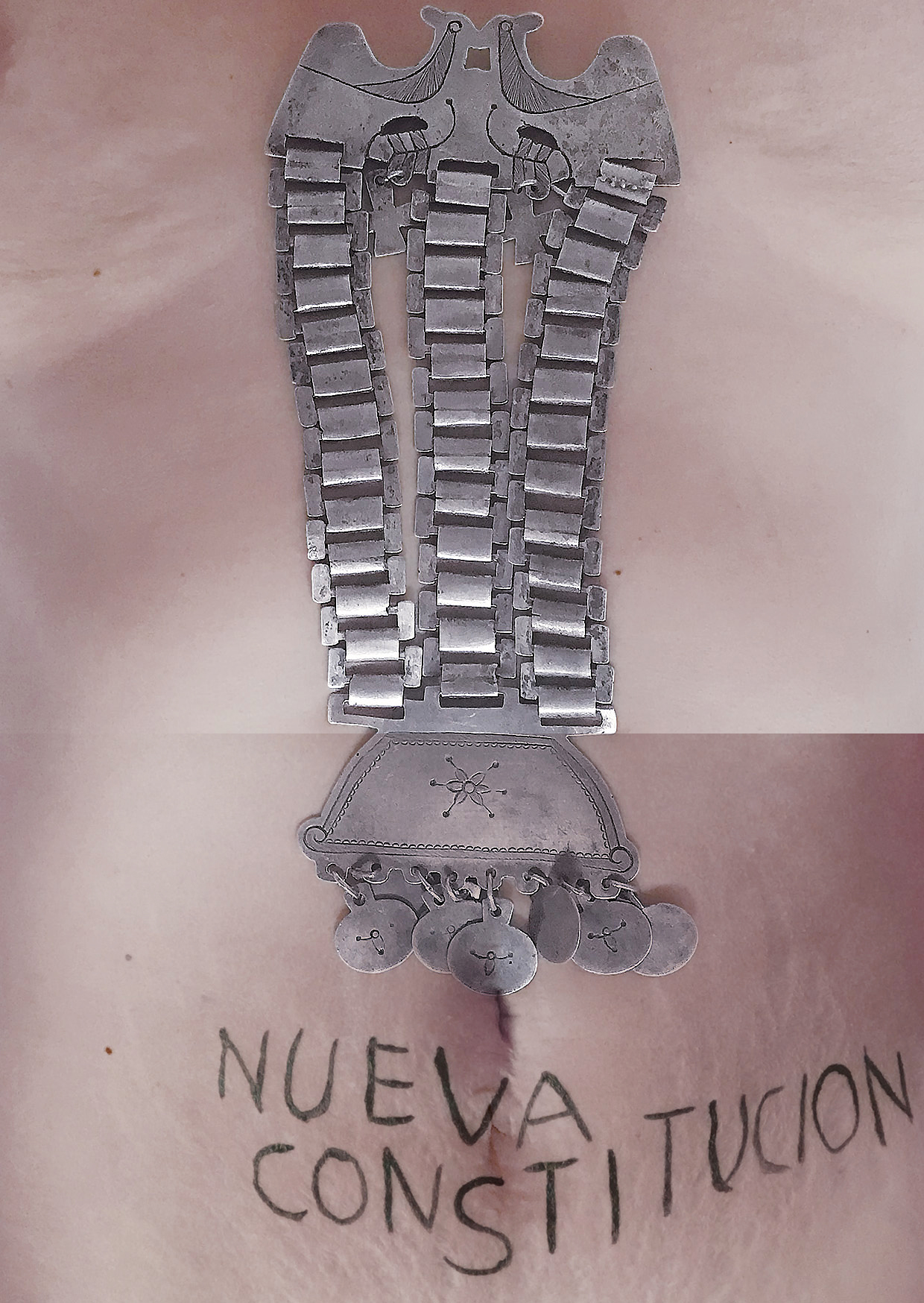
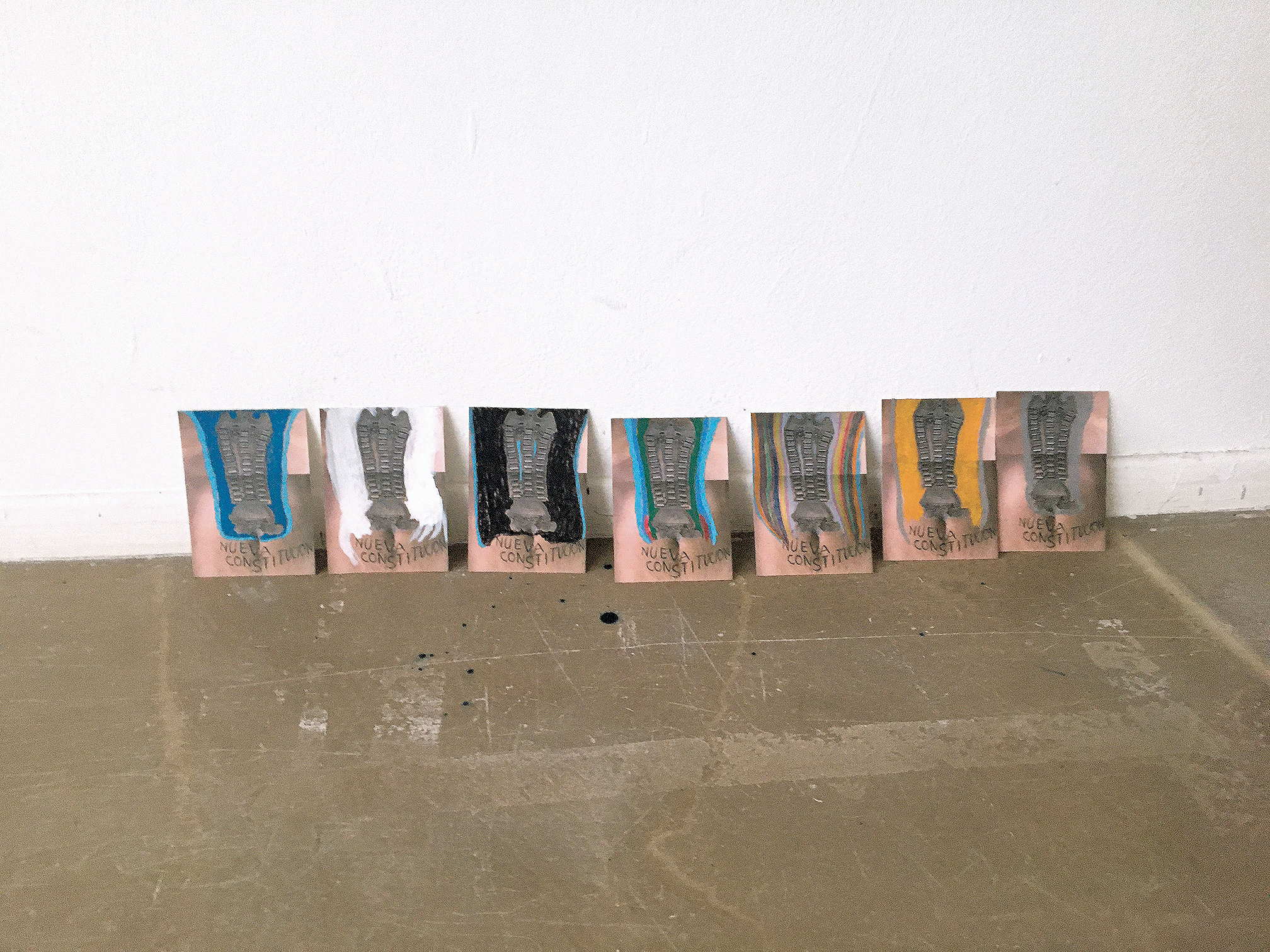
Print: Postcard Nueva constitucion
By: Marisa Cornejo
Description: offset print on cardboard
Size: 105 x 148 mm
Edition: unlimited
Date: 2021
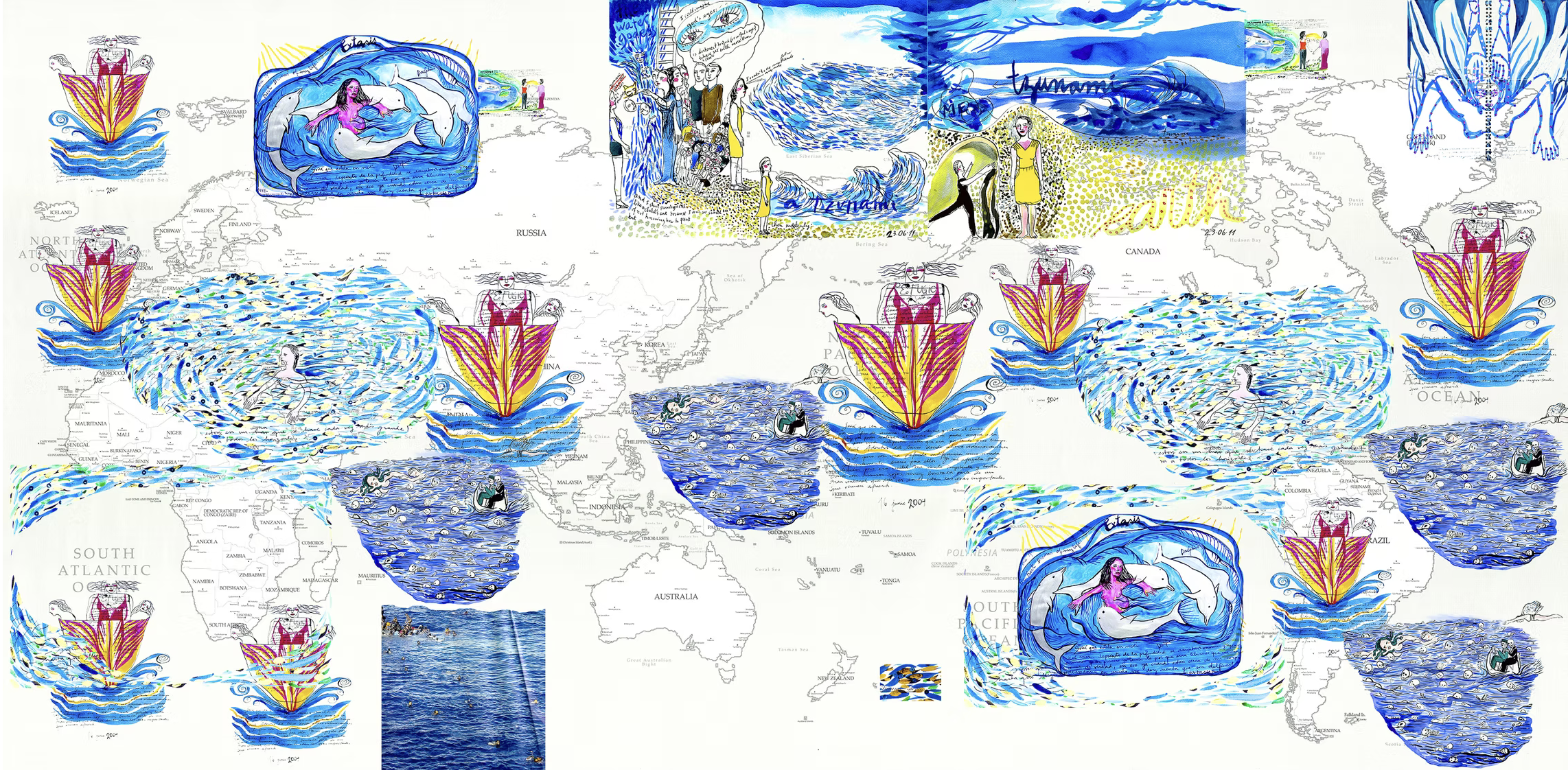
Print Proyecto de mapa (p35)
Description: digital
Curated by: Alys Longley and Máximo Corvalán-Pincheira
Date: 2020
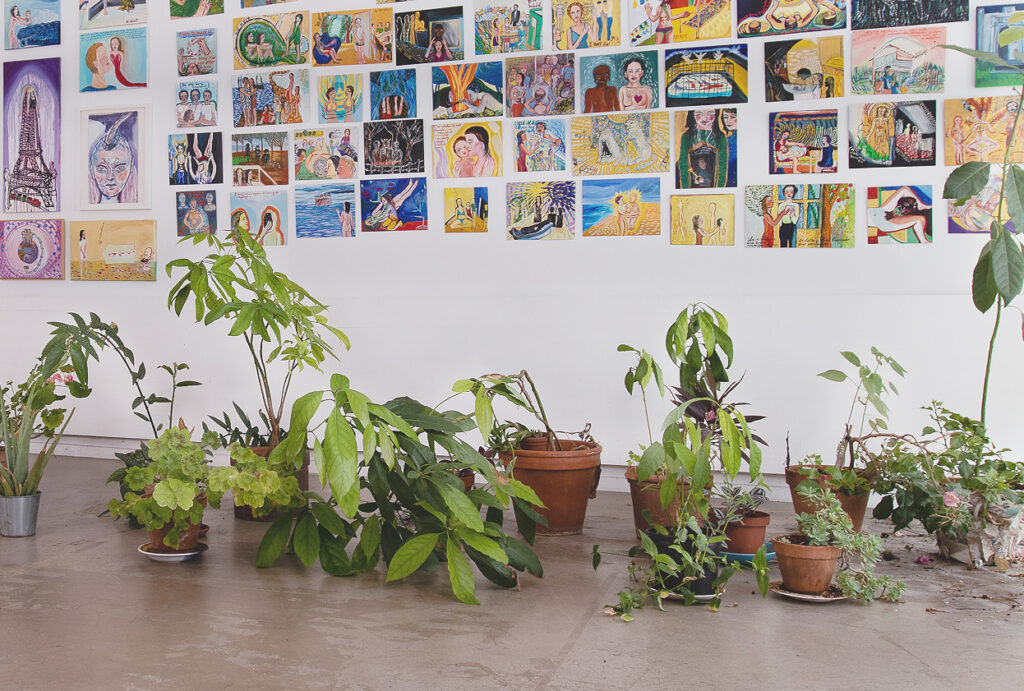
Title: Beaux rêves, oil paintings on metallic plates or canvas and migrant plants, 2012–2020
Group Show: Summer Display
Artists: Sergio Augusto et Marisa Cornejo
Curator: Marisa Cornejo and Stéphanie Prizreni
Venue: Espace Kugler, Genève, Suisse
Date: June – July 2020