• S.A.S. Escale à la Jonction

    Cheminée Nord, Geneva
    16.05.–15.06.2013 

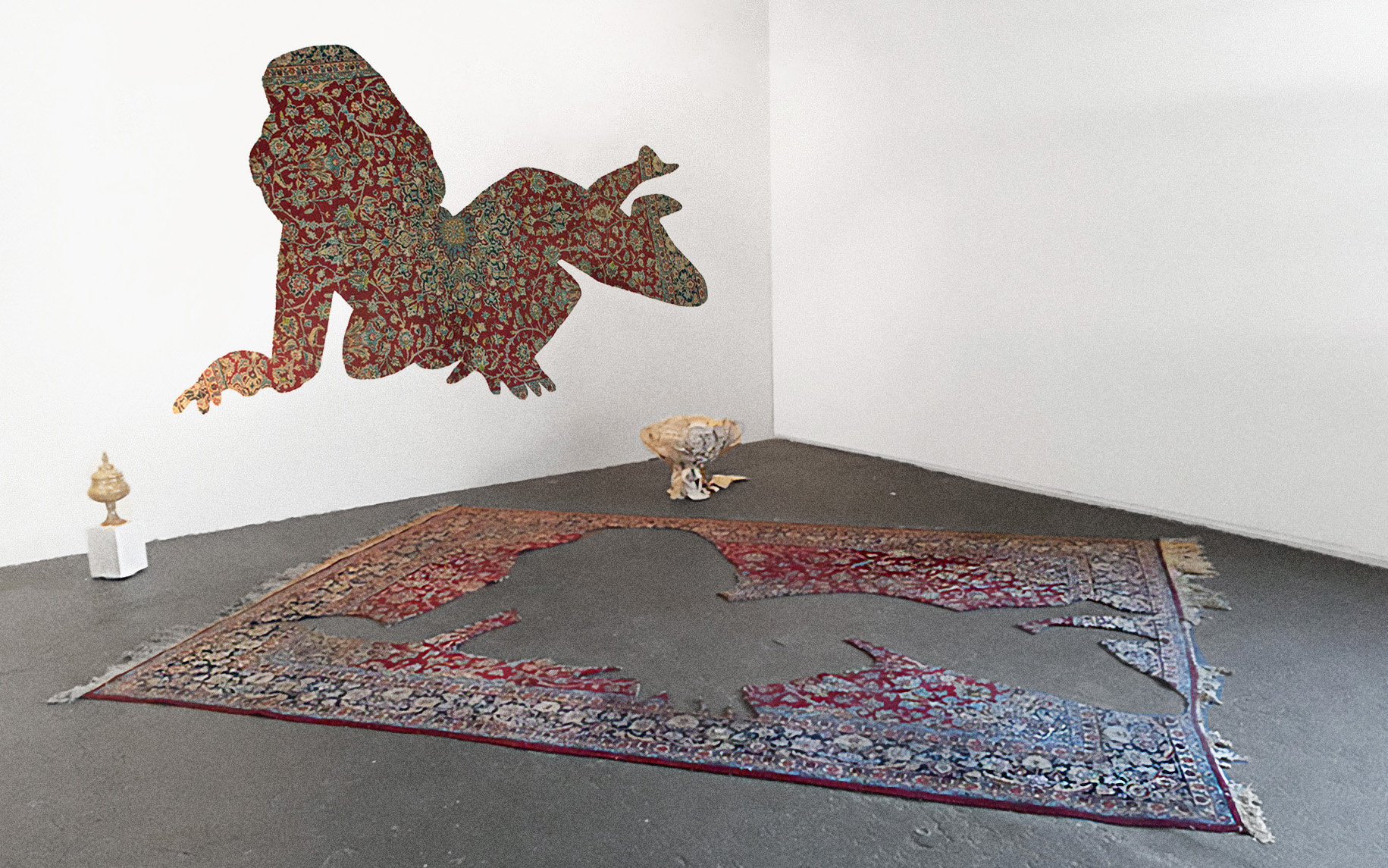
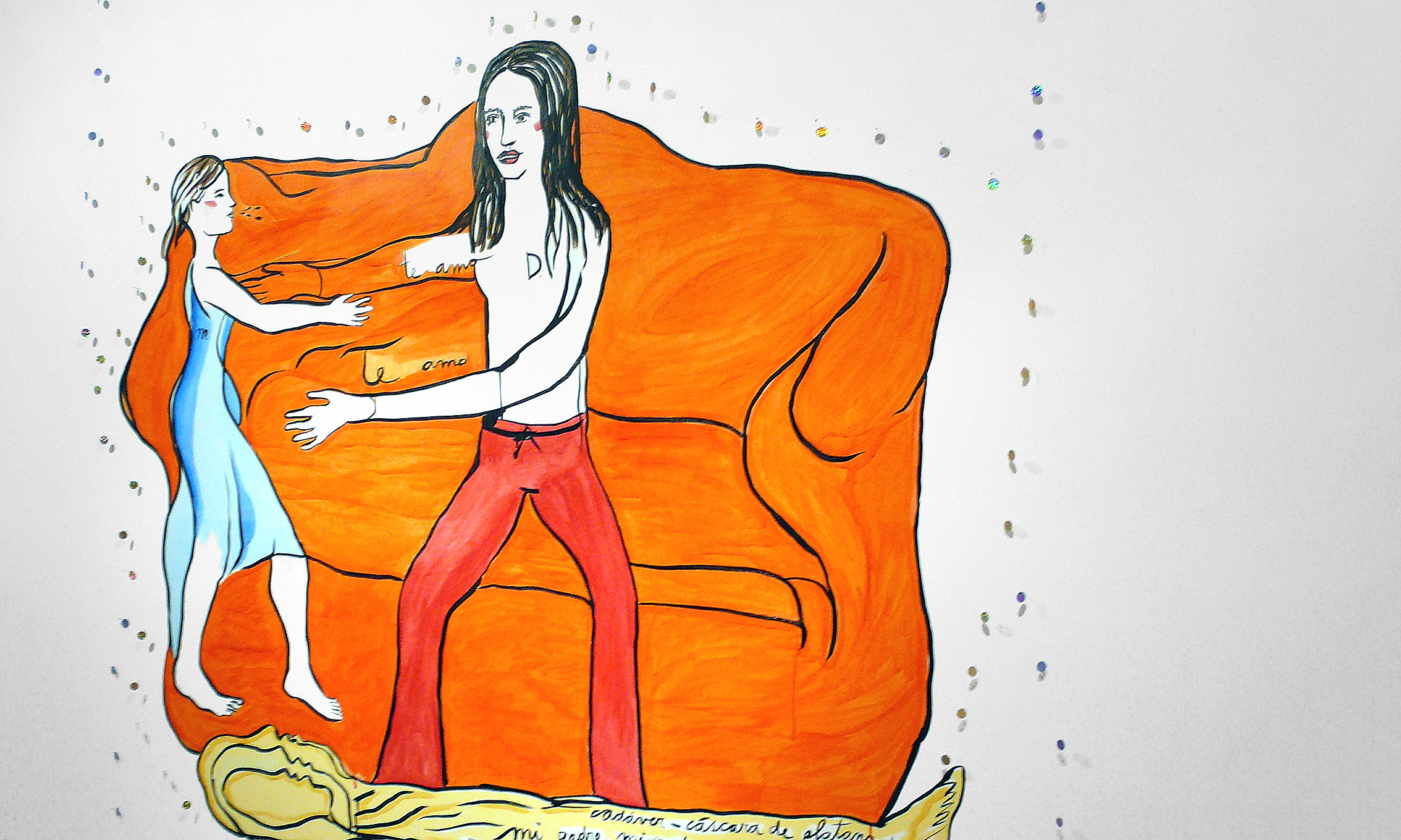
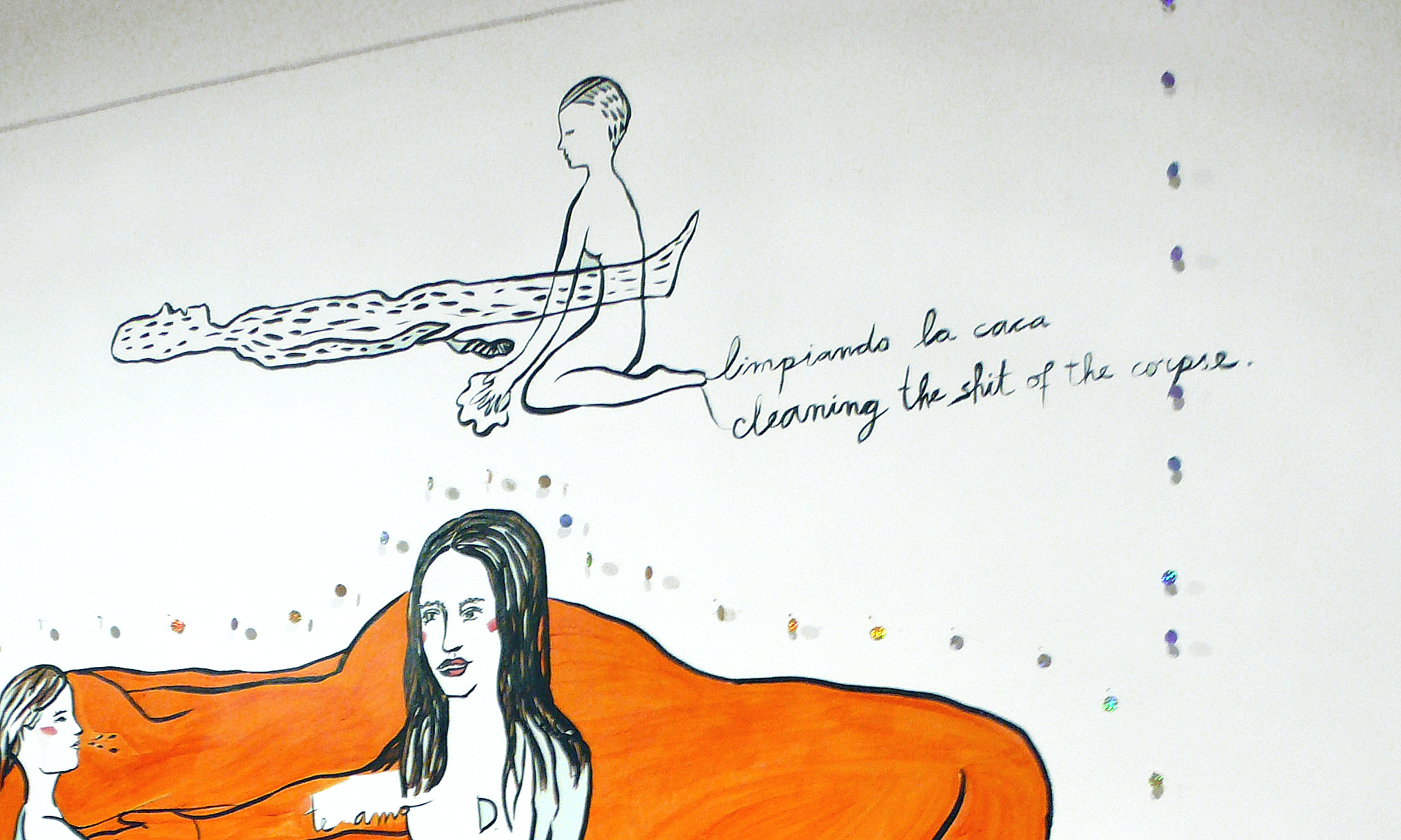
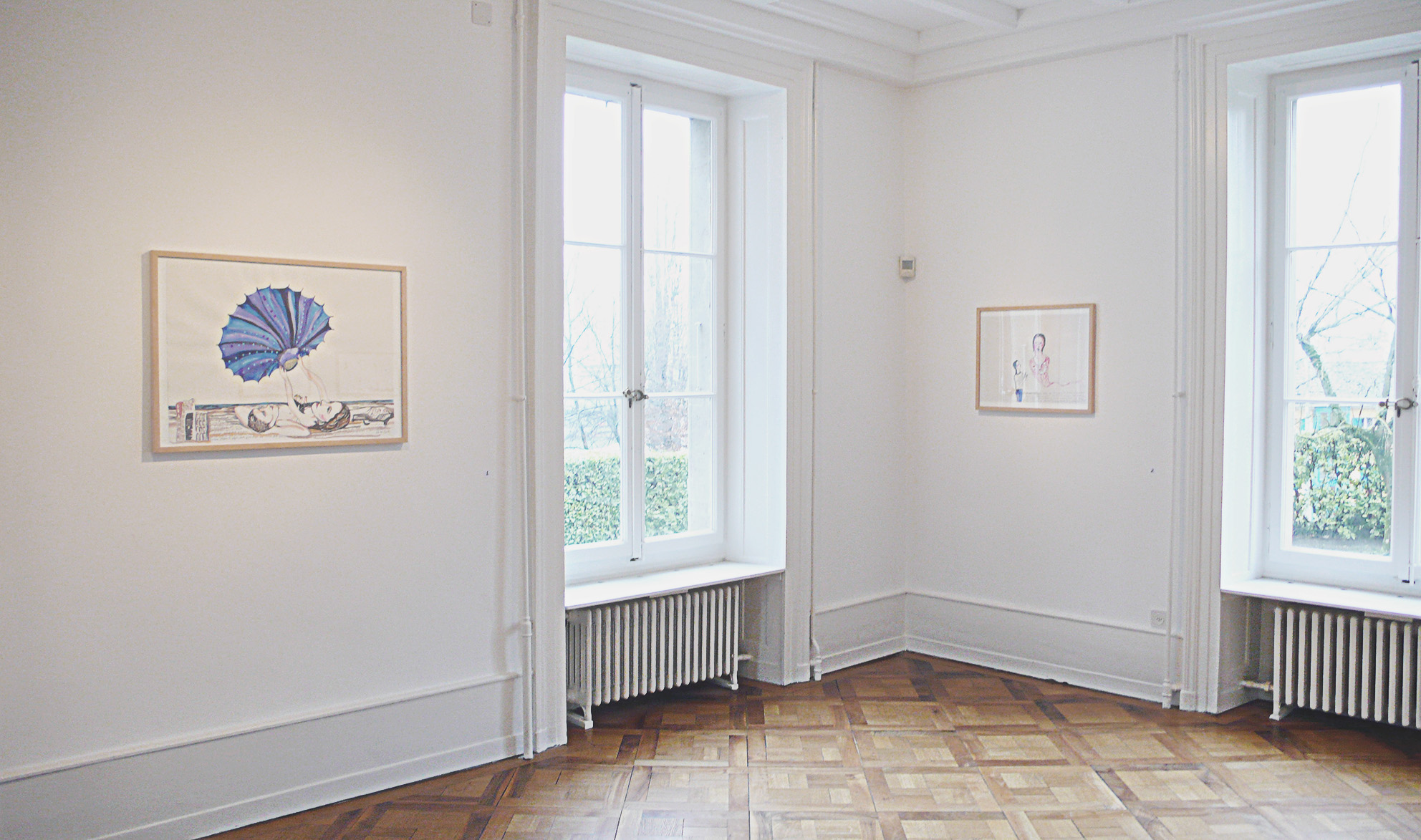
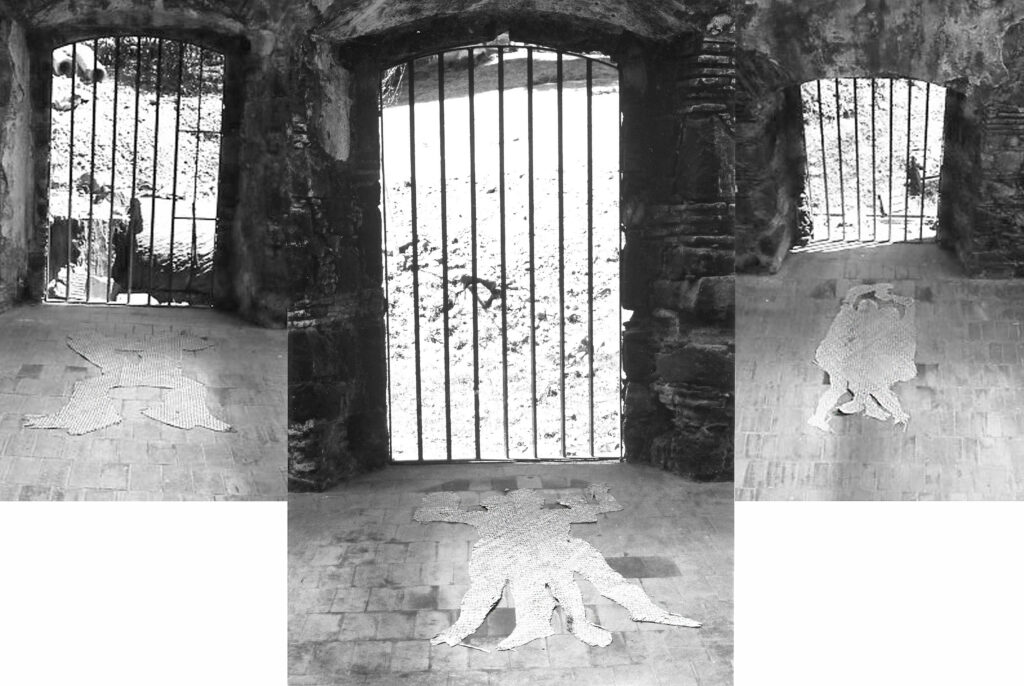
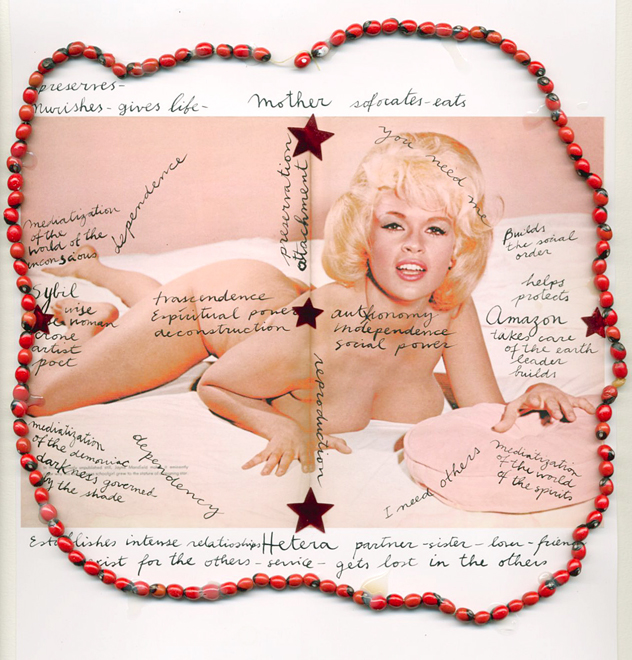
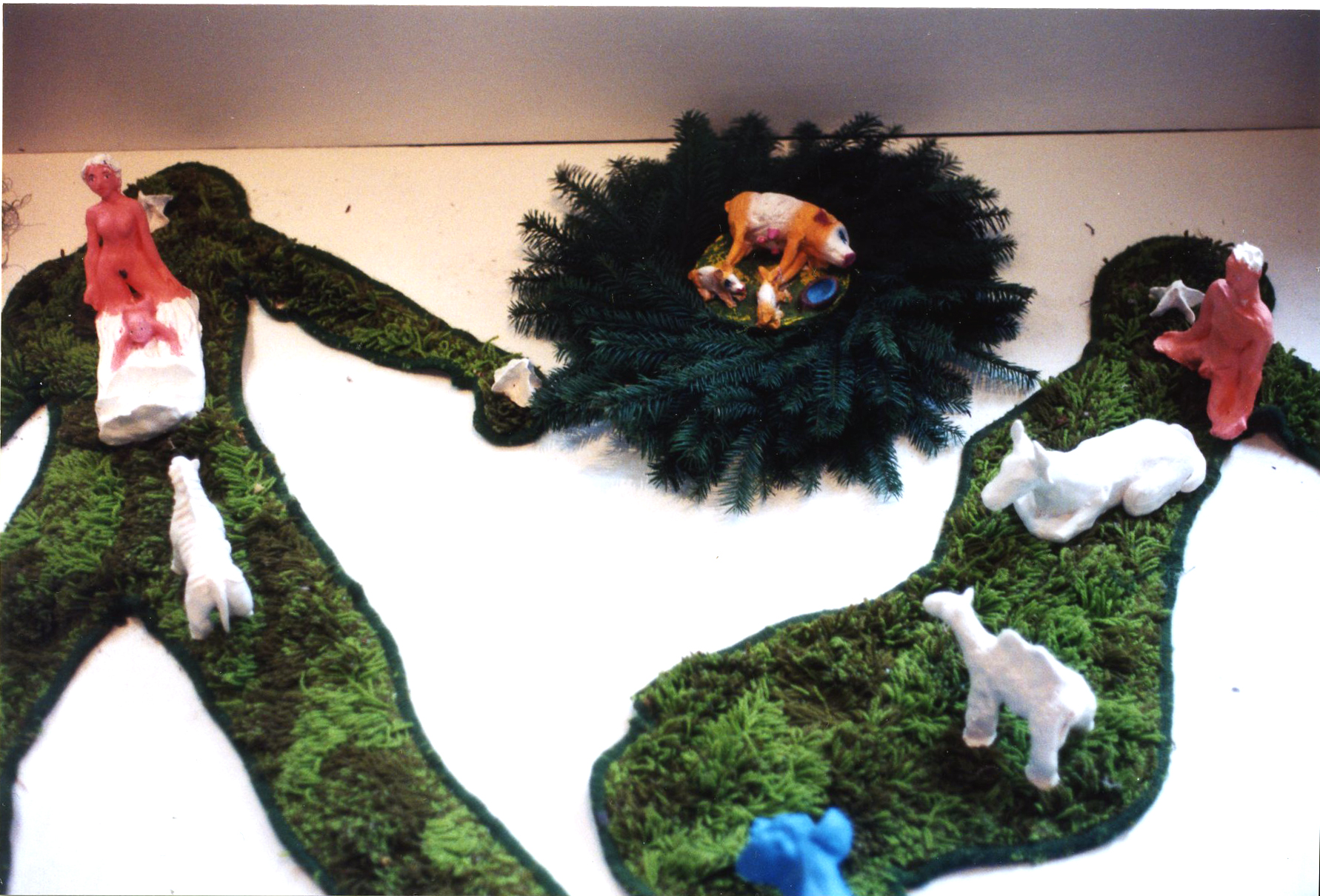
    Title: Descent and return, 2013, rug, objects, collage
    Exhibition: S.A.S. Escale à la Jonction
    Artists: Christine Boillat, Crystel Ceresa, Marisa Cornejo, Elodíe Delomier, Angela Marzullo, Noha Mokhtar, Vania Repond, Lucía Mure, Cécile N’Duhirhae and Sahar Suliman
    Curated by: Élodíe Delomier  
    Venue: Cheminée Nord, Geneva, Switzerland
    Dates: 16.05.–15.06.2013 

    For this exhibition Cornejo uses a silhouette carved in an persian rug of the playboy icon Jane Mansfield to raise questions around feminism and decoloniality. Jayne Mansfield (April 19, 1933 – June 29, 1967) was an American actress in film, theatre, and television, a nightclub entertainer, a singer, and one of the early Playboy Playmates. She was a major Hollywood sex symbol of the 1950’s and early 1960’s. Mansfield was 20th Century Fox’s alternative to fill the big emptiness Marilyn Monroe had left and came to be known as the Working Man’s Monroe. In the society of the spectacle, the hunger of the market needed a new celebrity, Jane Mansfield’s flesh and spirit was exploited as any other woman in our system of production and reproducción of the patriarchal status quo that wants to reach progress at any cost. After succeeding like a comet she had the commun decline some celebrities suffer and died drunk in a car accident with her whole family. When the society of the spectacle got bored of her and wanted to dispose her like and old carpet, she became a desperate mess playing with satanism, drugs, alcohol and sex.
    In 1995, I used her silhouette without knowing her biography to make a floor carpet in an exhibition called Hogar Dulce Hogar, in La Panadería in Mexico City, art critics, public and all stepped on her. Seventeen years later in Geneva I am using her silhouette again but as an homage to all women that get used like carpets and as an acceptance of all cycles of life we need to go trough to love ourselves. M. C.

  • 450 women have been murdered

    SAC Gallery, New York
    02.10.–04.11.2007

    Group show: 450 women have been murdered in Ciudad Juarez
    Artists: Erica Arce, Marisa Cornejo, Melissa Ehrenreic, Irene Gennaro, Jain Hutzell, Nefertiti Kelle- Farias, Lydia Martin, Ryan Sarah Murphy, Heloisa Pomfret, Favianna Rodriguez, Dorothy Simpson Krause, Izel Vargas and Patricia Yossen.
    Curated by: Keith Miller
    Venue: SAC Gallery, Stony Brook University, New York, USA.
    Dates: 02.10.–04.11.2007

  • Je t’aime beaucoup

    Villa Bernasconi, Genève
    07.02.–09.02.2007

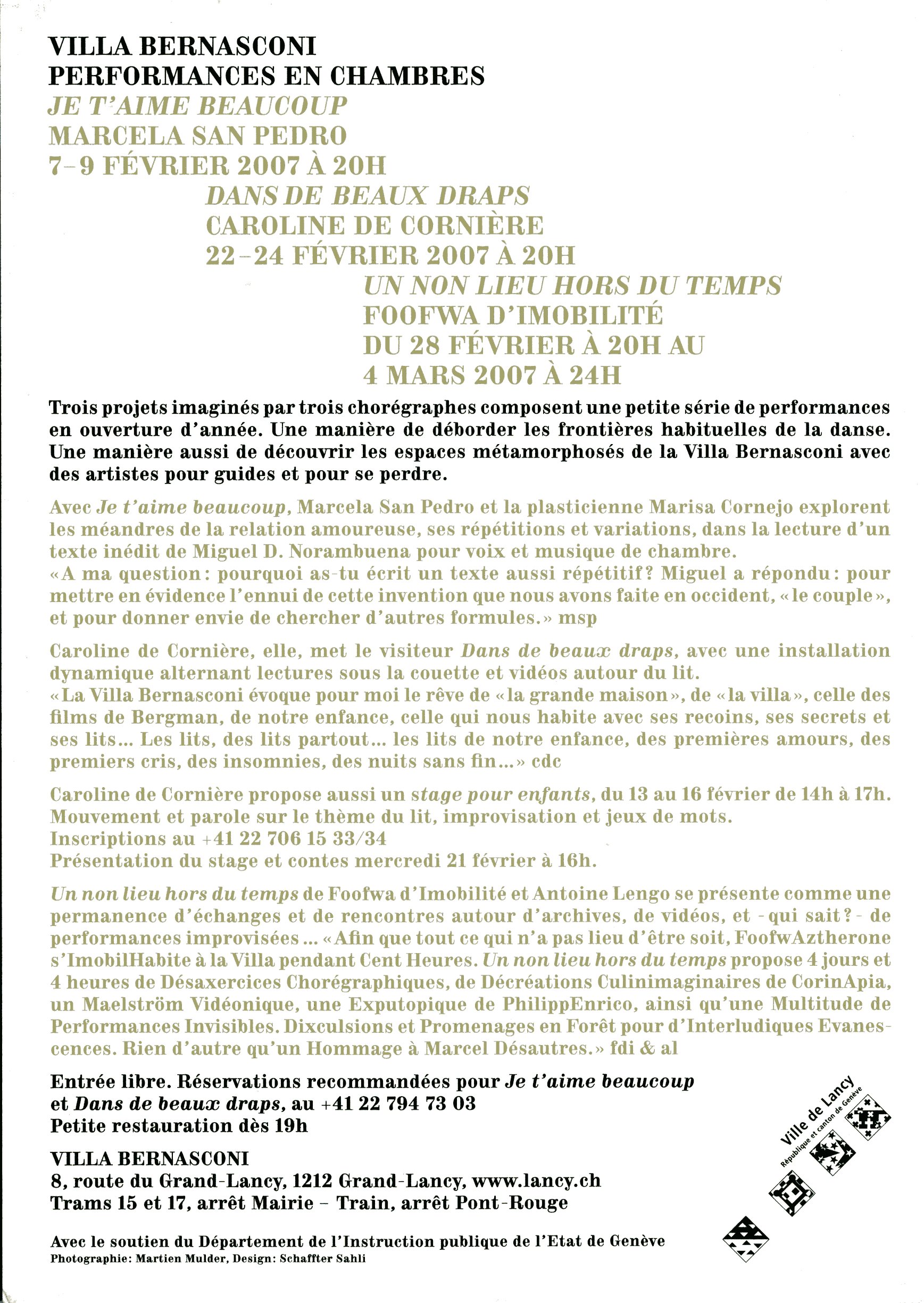
    Title: Je t’aime beaucoup, reading/installation
    Text: Miguel D. Norambuena
    Proposed by: Marcela San Pedro and Marisa Cornejo
    With: Marisa Cornejo, Pascal Desarzins and Sara Oswald (cellists)
    Exhibition: Performances en chambre
    Venue: Villa Bernasconi, Geneva, Switzerland
    Date: 07.02.–09.02.2007

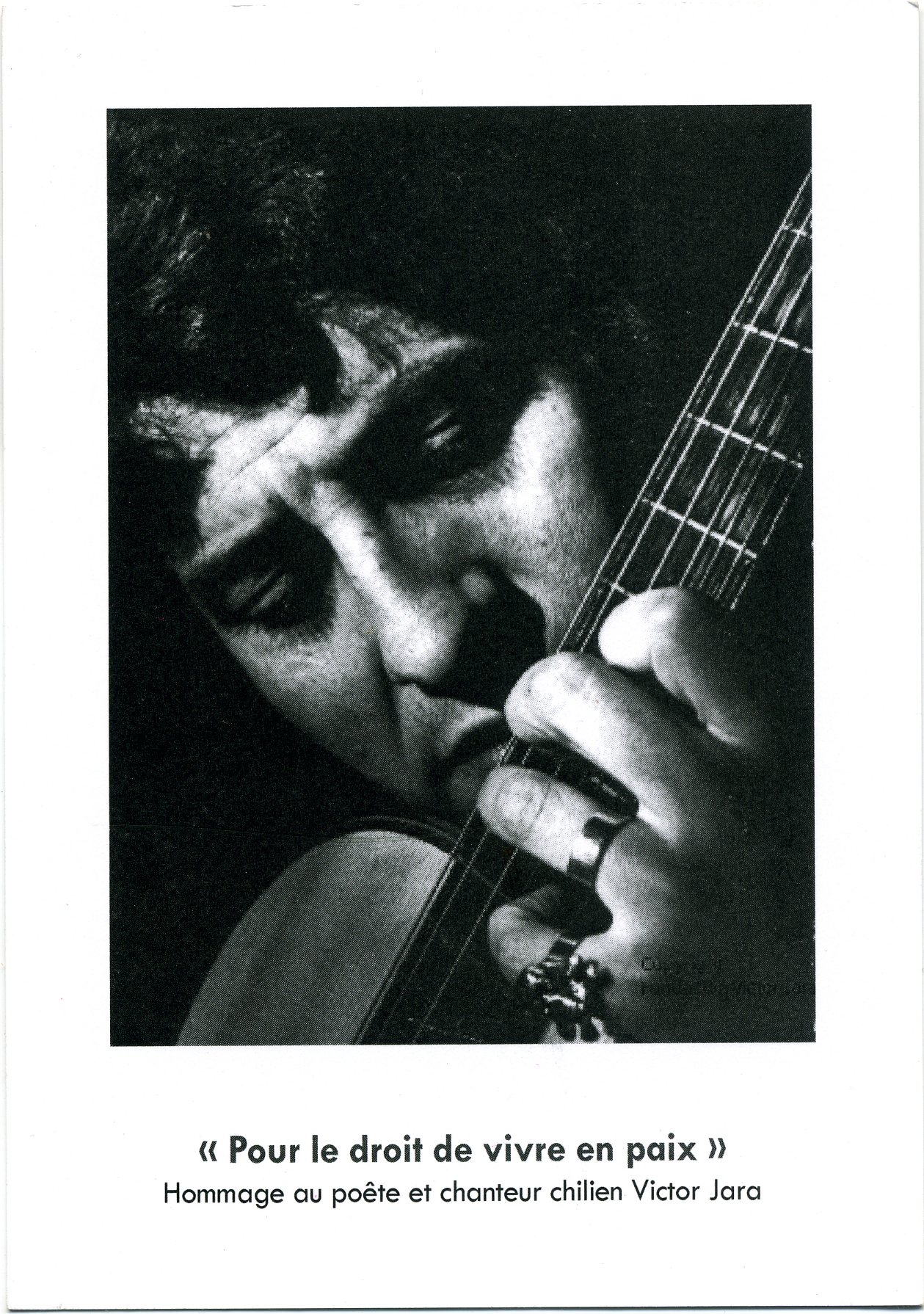
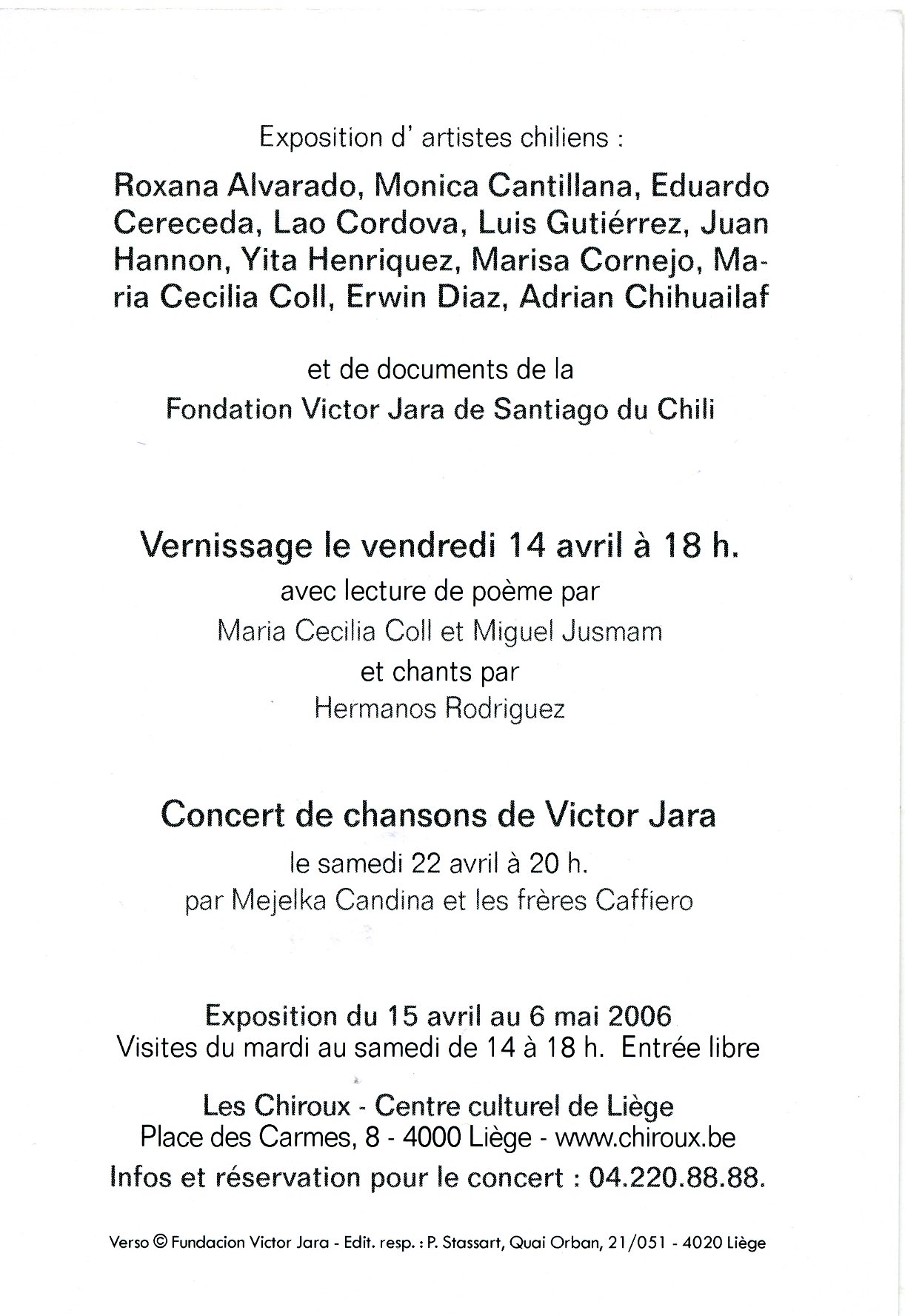
  • Pour le droit de vivre en paix

    Les Chiroux, Centre Culturel, Liège
    15.04–06.05.2006

    Works: We were all equals, ink and sequins on paper, 30x42cm, 2004. Documental, ink and sequins on paper, 32x40cm, 2003
    Exhibition: Pour le droit de vivre en paix. Hommage au chanteur chilien Victor Jara
    Artists: Roxana Alvarado, Monica Cantillana, Eduardo Cereceda, Lao Cordoba, Luis Gutiérrez, Juan Hannon, Yita Henriquez, Marisa Cornejo, María Cecilia Coll, Erwin Díaz and Adriana Chihuailaf
    Opening: 14.05.2006 – In presence of General Poblete, one of the two generals who refused to participate in the Coup d’Etat in Chile in 1973
    Venue: Les Chiroux, Centre Culturel de Liège, Belgique
    Dates: 15.04–06.05.2006

  • Exquisitos emigrantes

    Maus Hábitos, Porto, Portugal
    11.2003

    Artists: Marisa Cornejo, Carlos Gómez, Andreas Von Gehr, Carlos Ruiz and Thierry Deffert.
    Curated by: Natalia Arcos
    Venue: Maus Hábitos, Espaço de Intervenção Cultural,
    Rua Passos Manuel 178, 4º, 4000-382 Porto, Portugal
    Date: November 2003

    Schematization of Exquisite Emigrants:

    1:: Marisa Cornejo — Emigration > Identity: The Self in the Other > romantic relationships > altered drawings and photographs > baroque, dispersed arrangement of the work > overflow encouraged by Mexicanism.

    2:: Andreas von Gehr — Immigration > Identity: The Self in the Father > family relationships > digital photography and installation > contained, calculated arrangement of the work according to rules of perspective > rationalism characteristic of the German prototype.

    3:: Carlos Gómez — Emigration > Identity: The Self in My Environment > professional relationships of fellowship and competition > painting and objects > horizontal arrangement of the work with object-based elements allowing spatial and semantic openness.

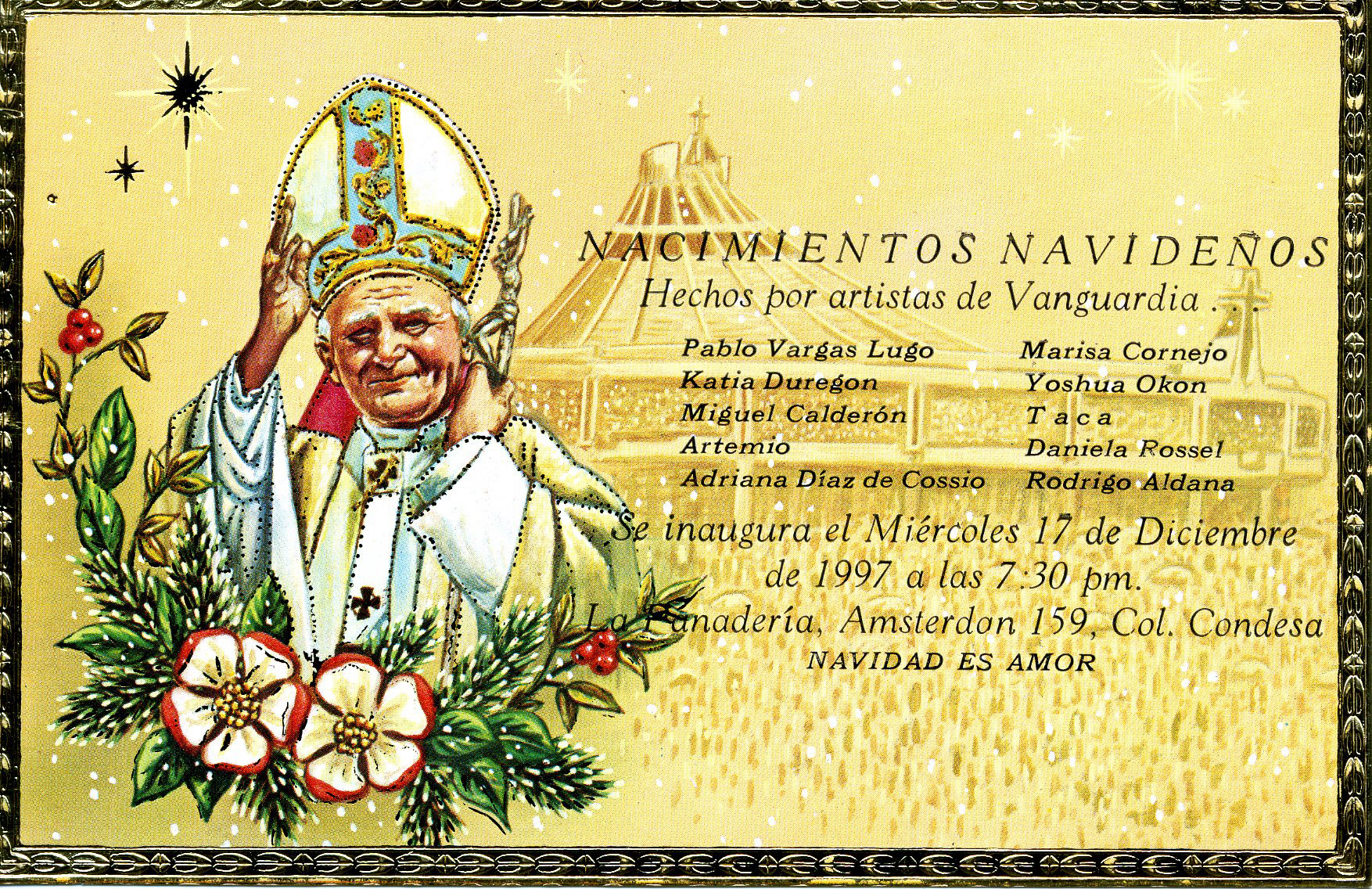
  • Nacimientos navideños

    La Panadería, México D.F.
    17.12.1997

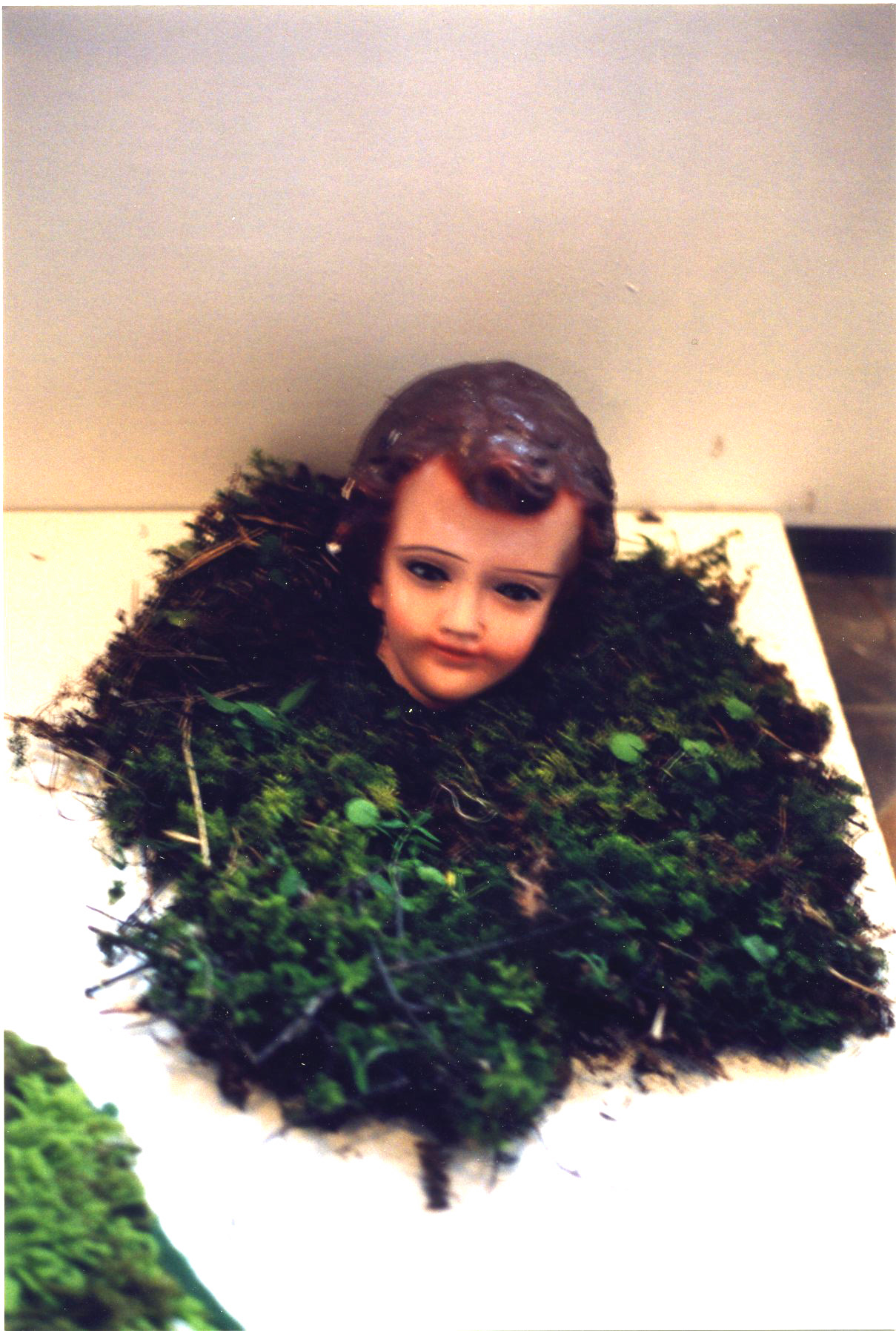
    Title: Nacimientos navideños. Hechos por artistas de Vanguardia
    Artists: Pablo Vargas Lugo, Katia Duregon, Miguel Calderón, Artemio, Adriana Días de Cossio, Marisa Cornejo, Joshua Okon, Taca, Daniela Rossel and Rodrigo Aldana
    Venue: La Panadería, Amsterdan 159, Col. Condesa, México D.F., México
    Date: 17 December 1997

  • Diálogo México-Tijuana

    Centro Cultural de Tijuana, Tijuana
    11.1997

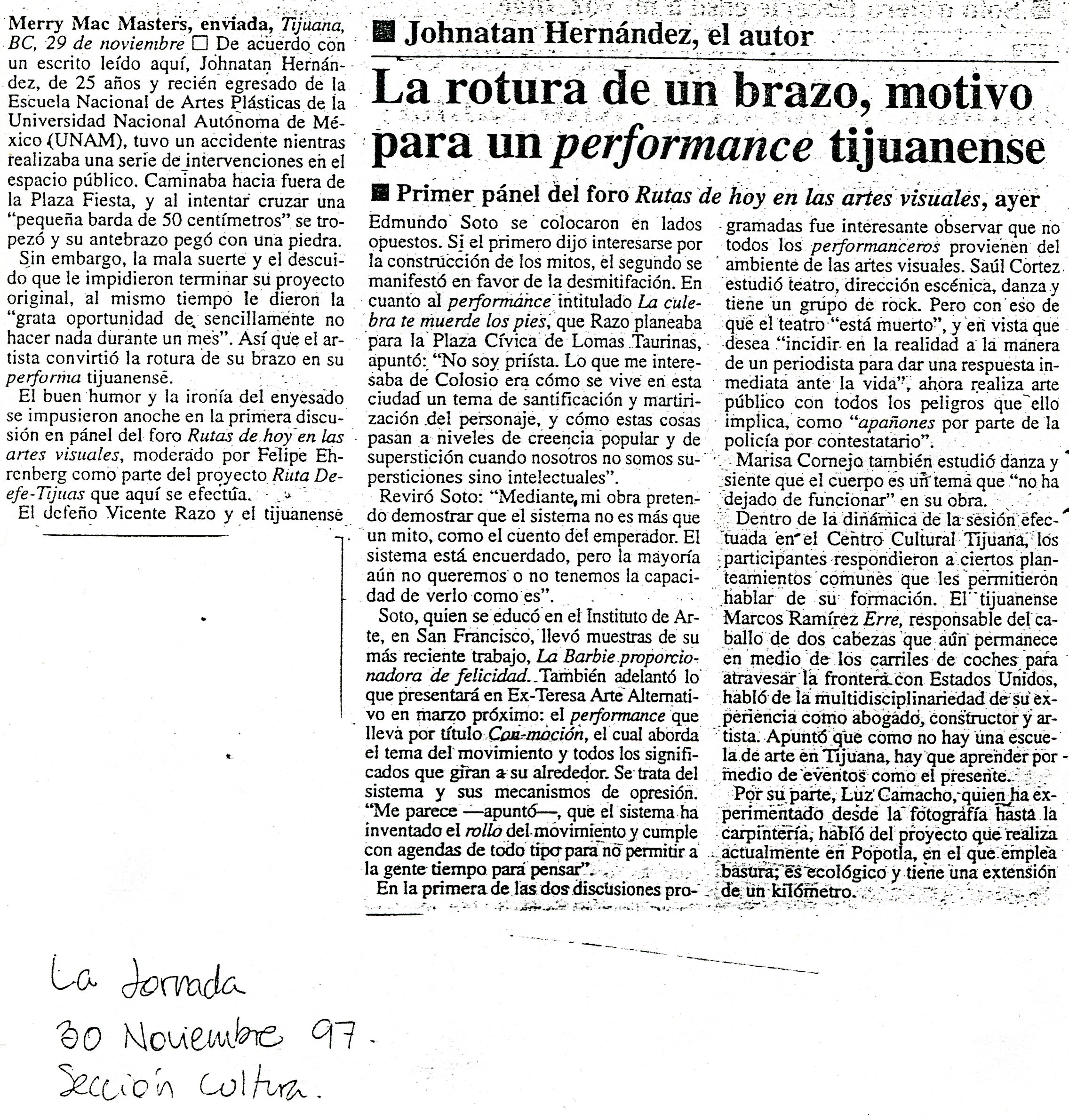
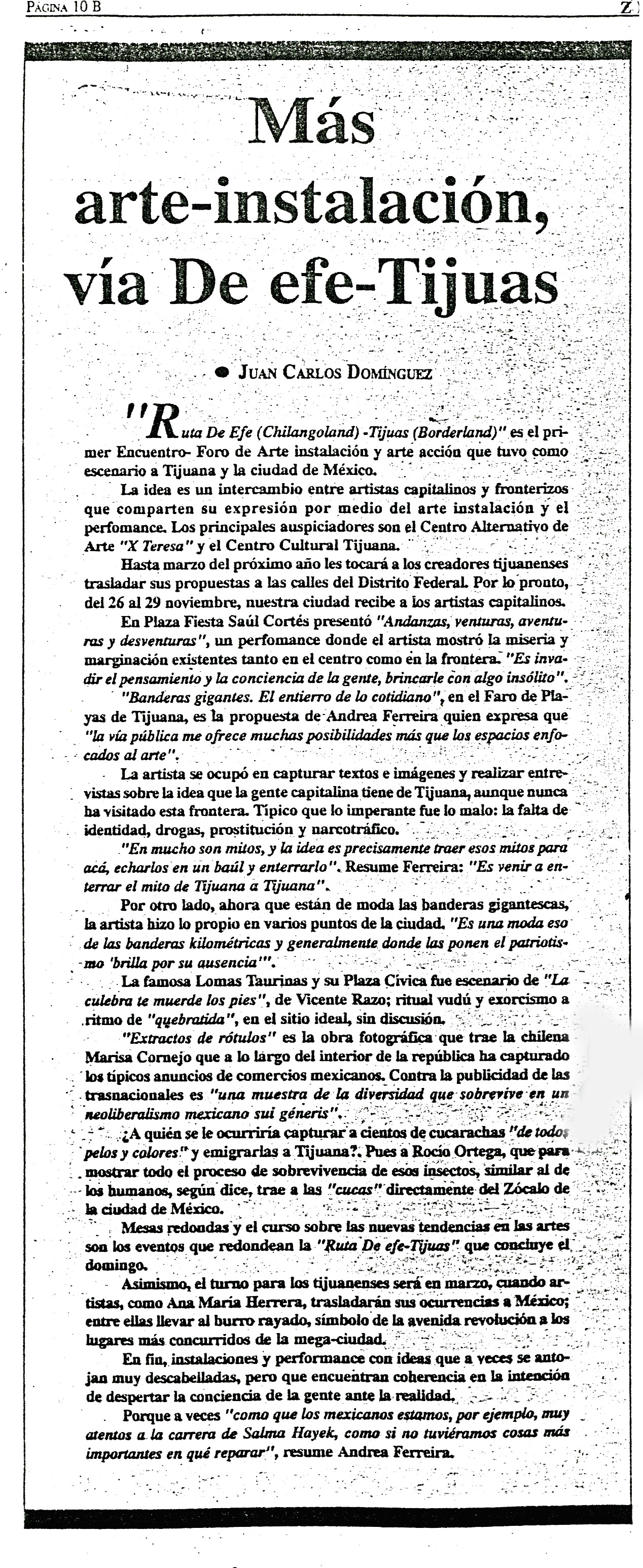
    Installation: Modulo de información, collection of photoraphs on cilinder, 160x250cm, 1997
    Exhibition: Diálogo México-Tijuana
    Artists: Marisa Cornejo, Saúl Cortéz, Andrea Ferreira, Jonathan Hernandez, Rocío Ortega y Vicente Razo
    Venue: Centro Cultural de Tijuana, Tijuana, México
    Date: November 1997

  • XX, reflexionar la violencia

    Centro Cultural Contreras, México D.F.
    03.–1997

    Artists: Marisa Cornejo, María Ezcurra and Mariana Gulco
    Curated by: María Ezcurra
    Venue: Centro Cultural Contreras, México D.F., México
    Date: March, 1997

  • Espacios imaginarios

    Facultad de Filosofía y Letras, UNAM, México
    03.1997

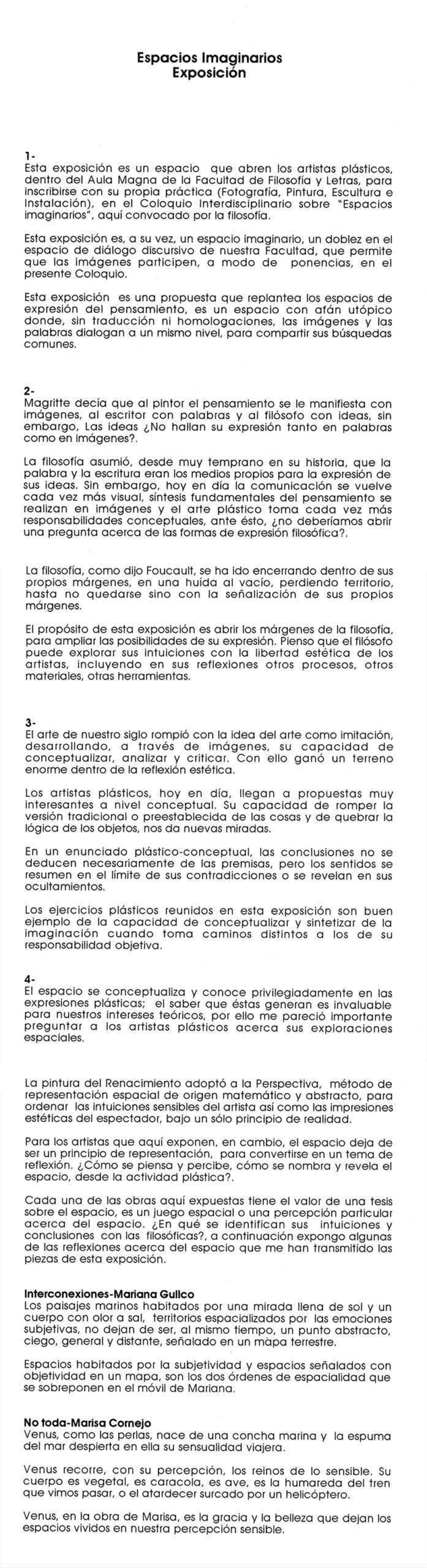
    Title: No toda, paintings
    Exhibition: Espacios imaginarios
    Artists: Marisa Cornejo and Mariana Gulco
    Curated by: Itala Schmeltz
    Venue: Facultad de Filosofía y Letras, UNAM, México City, México
    Date: March 1997

    No toda, Marisa Cornejo
    Venus, como las perlas, nace de una concha marina y la espuma del mar despierta en ella su sensualidad viajera. Venus recorre, con su percepción, los reinos de lo sensible. Su cuerpo es vegetal, es caracola, es ave, es la humareda del tren que vimos pasar, o el atardecer surcado por un helicóptero. Venus, en la obra de Marisa, es la gracia y la belleza que dejan los espacios vividos en nuestra percepción sensible. — Itala Schmeltz

    Not All, Marisa Cornejo
    Venus, like pearls, is born from a seashell, and the sea foam awakens her wandering sensuality.
    With her perception, Venus travels through the realms of the sensuous.
    Her body is plant, is seashell, is bird, is the smoke of the train we saw go by, or the sunset crossed by a helicopter.
    Venus, in Marisa’s work, is the grace and beauty left behind by lived spaces in our sensitive perception. — Itala Schmeltz

  • Somos diferentes pero amigos de verdad

    La Panadería, México
    27–29.09.1996

    Artists: Artemio, Eduardo Abaroa, Francis Alÿs, Miguel Calderón, Marisa Cornejo, Daniel Guzmán, Jerónimo López (Dr Lakra), Julián Lede, Richard Moszka, Yoshua Okon and Grupo Titan
    Curated by: Eduardo Abaroa, Miguel Calderón and Yoshua Okón
    Venue: Estancia Infantil Topiltzin, Guadalajara, México
    Date: 27–29.09.1996

    Esta exposición colectiva es un evento paralelo a la feria de Arte de Guadalajara organizado por La Panadería. En ella, Eduardo Abaroa, Miguel Calderón y Yoshua Okón solicitan al resto de los artistas invitados que utilicen el jardín de niños Estancia Infantil Topiltzin como parámetro conceptual para la elaboración de sus piezas, característica que dota a la exposición de múltiples posibilidades de alterar el orden de los objetos, crear una relación distinta entre forma y significado e intentar una resignificación de los espacios de la escuela.

    This group show is an event organized by La Panadería parallel to the Guadalajara Art Fair for which Eduardo Abaroa, Miguel Calderón and Yoshua Okón invited the other artists to use a kindergarten in Guadalajara, Estancia Infantil Topiltzin, as a conceptual parameter for the creation of their work. This allows the exhibitors a multiplicity of possibilities to alter the order of the objects and to create a different relationship between form and signifier and, in this way, to modify the school space.